While China’s initial reluctance was attributed to the sheer scale of the project, costing tens of billions of dollars, in the changed CPEC-helmed geo-economic-strategic context, its re-calculations cannot be ruled out.
The longer the price of oil remains depressed, India, like other major oil importers, will not only increase its dependence on crude imports, but it will also become more dependent on OPEC.
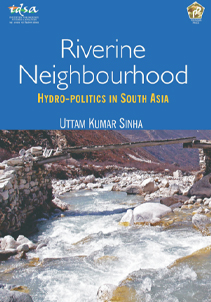
Rivers are the most visible form of fresh water. Rivers are ancient and older than civilizations a ‘mini cosmos’ spawning history, tales, spirituality, and technological incursions. Flowing rivers are the largest renewable water resource as well as a crucible for both humans and aquatic ecosystem.
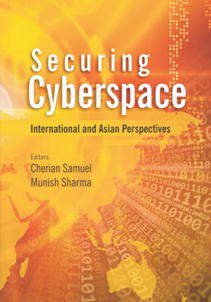
This edited volume contains the papers presented at the 18th Asian Security Conference at the Institute for Defence Studies and Analyses held in February 2016. The authors, drawn from government, law enforcement, diplomacy, private sector, armed forces and academia, examine a range of issues central to cybersecurity. The chapters in this volume not only provide an outline of the journey so far, but more importantly, give indicators of future trends in cybersecurity from the vantage point of the respective experts.
Contributions from Asia are particularly highlighted to promote and provoke greater discussion on perspective from within the region on cybersecurity issues.
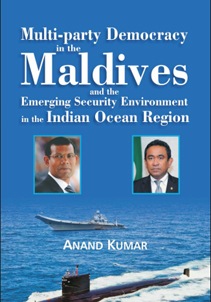
Maldives is the smallest country of South Asia. But its significance is no less because of its crucial geo-strategic location in the Indian Ocean. It sits astride on major sea lanes of communications (SLOCs). However, the crucial geo-strategic location of the Maldives has also caused problems for the country as it has aroused interests of major world powers.
The West Asian region is undergoing a phase of massive turbulence since the outbreak of the Arab Spring. This period has been marked by popular protests, internal conflicts, civil wars, military interventions and involvement of external players. The regional security situation remains fragile with a new terrorist entity, the Islamic State, emerging to challenge the existing geographical boundaries of the region. There has been an enormous increase in terrorism and extremism, and the non-state actors have gained significant influence in regional politics.
Under the US leadership, the international community has been fighting the war on global terrorism for the past decade and a half. Strategies and targets have undergone several changes in this war, but terrorism continues to show no signs of decline. It continues to pose a major security challenge to world order and stability. Concrete and chilling evidence for this was provided by the recent attacks in Paris, Egypt, Indonesia, Nigeria, Kunduz, Kabul, Peshawar and Pathankot. The list is indeed long and extensive to be fully recorded here. During the first 15 days of 2016, one website records 17 terrorist attacks in different parts of the world.
E-Copy available
Myanmar is an underrated neighbour with the potential to influence India’s vital strategic and economic interests. To keep track of the pulse of the mystic nation that is India’s closest Southeast Asian neighbour demands not just a scholarly approach but an empathy and an emotional connect. Rajiv Bhatia’s book, India–Myanmar Relations, is timely as it comes during a period when Myanmar is going through a significant phase of transition. Myanmar today stands at a crossroads confronted by a combination of developments on the domestic, regional and global planes.
India was always aware of the enormous energy reserves within its geographically proximate Central Asian region that could potentially fulfil its energy demands. The recent visit by Prime Minister Modi to the region has proved critical in paving the way for India to finally acquire a long awaited energy stake in the region. The new developments could not have been possible without the evolving undercurrents of the new geopolitical balance of power in the region. Russia seems to be playing a conspicuous role in nudging both India and Pakistan towards cooperation in the energy pipeline.