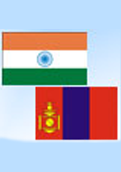
Genghis Khan and India-Mongolia Relations
It would be befitting to dedicate the 60th Anniversary of Indo-Mongolian Diplomatic Relations this year to the great Asian hero Genghis Khan.
- P. Stobdan
- 2016 |
- IDSA Comments
- |
It would be befitting to dedicate the 60th Anniversary of Indo-Mongolian Diplomatic Relations this year to the great Asian hero Genghis Khan.
The June 28 attack on Ataturk airport, as also the Zaventem attack in Brussels, have highlighted the security lacunae in all airports, which do not monitor the arrival terminals.
In purely legal terms, the Permanent Court of Arbitration’s decision will be binding, and a refusal to abide by its findings could have consequences. Beijing has, however, made it clear that in the event of a negative ruling it will simply ignore the judgment.
India should ensure that the deal does not slip away because of GRSE’s perceived financial inability, which may not actually be the case.
It appears that in order to earn the trust of China and the G7 countries, Sri Lanka has de-emphasised its relationship with India for the time being.
Few issues have drawn as much attention and have been debated as intensely as the rise of India. There has been a plethora of literature that almost dissects various factors that have contributed to India’s rise and what the future holds for the country. Will India emerge as a major player in the international system? Will it be able to compete with a rising China as an Asian power? These are some of the questions that have confronted scholars of international relations and security.
The process of active collaboration between the practitioner and the scholar can sometimes result in desirable policy outcomes. The book under review is one such commendable initial attempt. Ambassador Navrekha Sharma retired from the Indian Foreign Service (IFS); her assignments included Joint Secretary (JS) South (1999–2001) and Ambassadorial posting to the Philippines and Indonesia. In fact, she had two postings in Jakarta, first as Minister-Counsellor (1993–1996) and later as Ambassador (2006–2008).
India is often perceived as a regional power, but a closer look reveals that it is in a disadvantageous position vis-à-vis China in South Asia. The first reason is that Indian governments never had the political, economic, and military capacities to pursue their regional power ambitions with their neighbours in the long run. South Asian countries could always play the China card in order to evade India’s influence. Second, India’s new South Asia policy with the focus on trade and connectivity has improved regional cooperation since 1991.
SCO will need to assume responsibility for providing security in Afghanistan in the aftermath of the withdrawal of ISAF forces.
Until the next plenary in Switzerland in 2017 or the interim meeting before the end of 2016, India should actively engage with all members and particularly with those who have expressed doubts or raised queries, including China.