The Kazakh Unrest
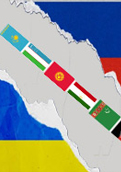
Triggered by the recent hike in auto gas prices, the current crisis in Kazakhstan appears to be an expression of the long-term frustrations of common Kazakhs with the political system.
- Deepak Kumar
- 2022 |
- IDSA Comments
- |
Triggered by the recent hike in auto gas prices, the current crisis in Kazakhstan appears to be an expression of the long-term frustrations of common Kazakhs with the political system.
Japan is manifesting refreshing confidence drawing from its resolve to push the envelope of positive pacifism while determining the strategic balance in the Indo-Pacific.
Xi Jinping’s rise has led to a paradigm shift in many aspects of China’s domestic and international politics. A key element of this has been the ideological vision shorthanded as the 'Chinese Dream', combining elements of nationalism, Confucian ideology, and economic expansionism. Singh evaluates the various changes in China’s nominally communist ideology in the post-Mao era, with an emphasis on the implications for China’s economic and security relations with other countries. He particularly focusses on China’s approach to South Asia and the Indian Ocean Region, key elements of China’s strategy.
An insightful guide to understanding the direction of China’s foreign and security policy, and especially its impact on India–China relations.
At the St. Petersburg International Economic Forum in 2017, the Minister for Trade of the Eurasian Economic Commission, Veronika Nikishina and India’s Minister of State of Commerce and Industry, Nirmala Sitharaman met to sign a joint statement on the start of negotiations on a free trade agreement between the Eurasian Economic Union (EAEU) and India.
‘Security’ and ‘status’ complexities are critical impediments for any state’s foreign policy; and India is no different. This article argues that as the China threat looms large, New Delhi will not be in complete repudiation of an ‘Asian NATO’ (or “Indo-Pacific NATO”), despite strategically refraining from being party to a definitive military alliance and an age-old non-alignment principle. However, India’s support will be contingent on the future trajectory of its ties with Beijing.
A larger exchange of defence business between India and Southeast Asia may consolidate India’s position in the regional security architecture, and also forge greater political alignment with important ASEAN partners.
The China-Pakistan Economic Corridor (CPEC) has been earmarked as a flagship project of the Belt and Road Initiative (BRI), which is described as Chinese President Xi Jinping's signature foreign policy initiative and a grand strategy aimed at restoring China's “rightful'' great-power status in the world. It is a major plank in China's geo-strategic and economic architecture for the region, using Pakistan to secure an exploitative strategic perch in South Asia and the Arabian Sea, overlooking the crucial Persian Gulf, the west coast of India, and the east coast of Africa.
President Putin’s short but highly consequential visit to India and the launch of the 2+2 format have imbued new dynamism into the bilateral partnership. There might be a few areas of divergence between the two sides but spheres of convergence are much greater.
The end of colonial rule was an important milestone worth celebrating, but what lay ahead was a long journey towards the making of modern India. The narrative of ‘modern India’ would be incomplete without the stories of institutions that helped shape India as we know it today.
This volume, part of a series on Institutions that Shaped Modern India, offers an in-depth introduction to one such institution—the Indian Space Research Organisation (ISRO). It tells the story of ISRO from its inception to present times. Capturing its history and its evolution, dotted with several achievements and some setbacks, and offering deep insights into ISRO’s key projects—past, present and future—the book is an ode to an institution that has been at the steering wheel of India’s journey into space and has played a seminal role in nation-building.