The West Asia Centre seeks to cover issues, themes and countries of the region which are undergoing rapid political transformation impacting the political and security situation of the region and beyond. Popular protests demanding political and economic reforms and the subsequent fall of some long ruling authoritarian rulers and the rise of Islamists to power have significantly changed the region’s political landscape. GCC-Iran rivalry, Shia-Sunni sectarian conflict, external intervention in the region, and the rise of religious radicalism have further aggravated the situation. The Centre is closely following the unfolding internal political developments in individual countries as well as the regional political scenario.
The historical shifts in the region and domestic political developments will have a significant impact on India’s external environment. With huge stakes in the region such as energy, trade and safety of Indian citizens in the region, it has become important for India to carefully watch developments taking place in its ‘extended neighbourhood.’ These and other related issues are being focused upon by the scholars at the Centre. The Centre continues to hold regular bilateral dialogues with some leading think tanks in West Asia thus facilitating exchange of ideas and perspectives.
Current projects being pursued in the Centre are:
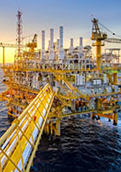
Linking South and Central and West Asia: Transportation and Energy Cooperation
Political transformations in the Arab world and implications for India
Regional organisation in Gulf: The Gulf Cooperation Council
India-Arab relations and partnership
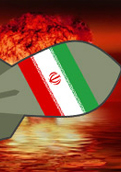
Iran’s domestic and foreign policies
India’s Engagement with Iran: Prospects and challenges.
The Eastern Mediterranean offers India strong prospects for import of natural gas, given strong bilateral relations with regional countries, including Egypt, Israel, Greece and Cyprus.
The Orban government’s foreign and domestic policies will continue to be under the EU’s scanner, as it seeks to ramp up pressure on Russia for precipitating the worst security crisis that Europe is witnessing after the Second World War.
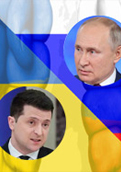
With the war in Ukraine moving towards an uncertain resolution, there is a danger that the influx of heavy weaponry and foreign fighters could bring in a new set of imponderables into an already vicious and escalating conflict.
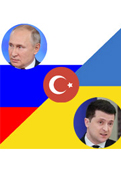
Turkey is facing serious challenges in the wake of the Russian invasion of Ukraine. Its response to the conflict could have far-reaching implications for its struggling economy, damaged relations with the US and EU, its complex partnership with Russia, and for the regional security architecture in the Black Sea.
With the failure of moderates’ Western outreach in the aftermath of US withdrawal from the JCPOA, the conservatives, now in power in Iran, are looking for a long-term partnership with Russia which would bring stability in their shared neighbourhood, geoeconomic opportunities and also weaken the influence of moderates and reformists.
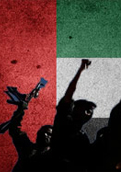
The recent Houthi attacks on the UAE have widened the ambit of the ongoing war in Yemen, and are likely to prolong the instability in and around Yemen and hinder the regional and international efforts towards establishing peace in the country.