The West Asia Centre seeks to cover issues, themes and countries of the region which are undergoing rapid political transformation impacting the political and security situation of the region and beyond. Popular protests demanding political and economic reforms and the subsequent fall of some long ruling authoritarian rulers and the rise of Islamists to power have significantly changed the region’s political landscape. GCC-Iran rivalry, Shia-Sunni sectarian conflict, external intervention in the region, and the rise of religious radicalism have further aggravated the situation. The Centre is closely following the unfolding internal political developments in individual countries as well as the regional political scenario.
The historical shifts in the region and domestic political developments will have a significant impact on India’s external environment. With huge stakes in the region such as energy, trade and safety of Indian citizens in the region, it has become important for India to carefully watch developments taking place in its ‘extended neighbourhood.’ These and other related issues are being focused upon by the scholars at the Centre. The Centre continues to hold regular bilateral dialogues with some leading think tanks in West Asia thus facilitating exchange of ideas and perspectives.
Current projects being pursued in the Centre are:
Linking South and Central and West Asia: Transportation and Energy Cooperation
Political transformations in the Arab world and implications for India
Regional organisation in Gulf: The Gulf Cooperation Council
India-Arab relations and partnership
Iran’s domestic and foreign policies
India’s Engagement with Iran: Prospects and challenges.
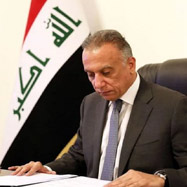
Since taking over as the Iraqi prime minister in May 2020, Mustafa al-Kadhimi has blended pragmatism with caution while dealing with significant domestic as well as external challenges.
In the aftermath of Samuel Paty’s beheading, France is taking measures that seek to reverse the processes through which individuals become ‘terrorists’. If successful, other countries could emulate such policy interventions in their own counter-radicalisation efforts.
GCC countries are taking measures to nationalise the labour force, which is adversely affecting the Indian expatriates across all sectors. Even as India is getting equipped to tackle the return migration, the creation of a comprehensive database will help better manage the crisis in the long run.
Turkish global power aspirations are hindered by a lack of regional influence. Ankara wishes to enhance strategic depth in the neighborhood. Deviating from a soft power approach, President Erdogan has increasingly adopted a confrontational foreign policy.
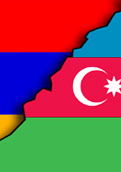
Armenia and Azerbaijan have come to blows over disputed Nagorno-Karabakh after a quarter of a century. There are numerous geo-strategic interests at play in the conflict that will impact regional peace and security.
Unlike other parts of the Muslim world, spanning North Africa to Southeast Asia, that have remained under the theological and cultural influence of Arabia, India has been able to develop its own versions of Islam and holds its own against West Asian influences.
The normalisation of relations between the UAE and Israel is a historic development and a step forward in the rapprochement between the Arab Gulf and Israel.
The internal and external situation on the first anniversary of the historic revocation of the special status of Jammu and Kashmir appears assuring, even as the need for safeguarding the initial gains calls for sustained efforts.
India has taken a cautious and balanced approach in dealing with Iran. However, the growing US-Iran confrontation continues to cast a shadow on the Chabahar project and overall bilateral ties.