India–Israel: The View from West Asia
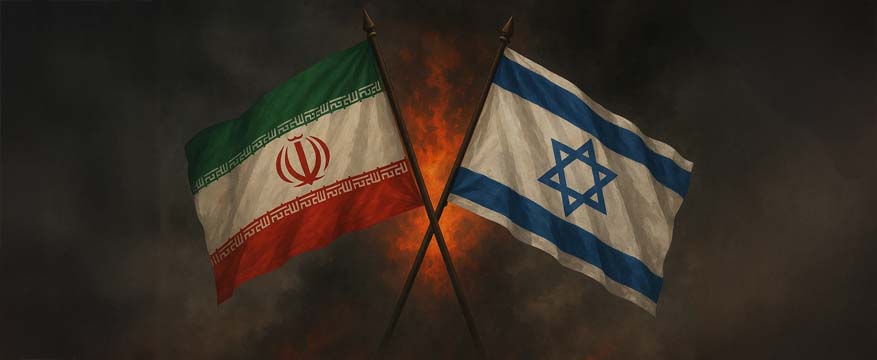
The view from West Asia of India–Israel ties has been interlinked not only with the region’s negative perception of Israel but also with Israel’s evolving position in the West Asian geo-political framework. The growing economic and political power of India in the last two decades and its deepening economic ties with countries in West Asia, however, have brought new factors into play. This perspective, along with the promise of the positive role India can play in West Asian affairs, now colours the Arab appreciation of India–Israel ties as well.
India–Israel Defence Engagement: Land Forces’ Cooperation
The Israeli military has been tested through the entire range of conflict from the conventional to the asymmetric since its inception in May 1948 to the present day. In the process, it has become one of the most powerful military forces in West Asia, with a reputation to match. Not many are aware that Indian Jews, notably the Bene Israelis, have served with distinction under Indian chieftains as well as the East India Company a few hundred years ago.
Redefining ‘Strategic’ Cooperation
A quarter century after normalisation of relations, India and Israel have shown considerable maturity in handling bilateral relations and dexterity in managing their occasional differing worldviews. Relations have weathered political changes within India as well as periodic upheavals in West Asia and the stalemate in the Israeli-Palestinian negotiations. Military-security cooperation played a pivotal role in carrying forward relations even when political contacts were minimal, as was the case during the decade-long United Progressive Alliance (UPA) rule.
Power Politics: How China and Russia Reshape the World by Rob de Wijk
A lot of literature has appeared in recent years on how Russia and China have come to present a common challenge to the US-led world order. But the author of the book Power Politics: How China and Russia Reshape the World, Rob de Wijk, has propounded a different theory to prove a case rather in an ominous way that the old-style power politics has never gone away from the global scene even after the end of the Cold War.
Re-emerging Powers and the Impasse in the UNSC over R2P Intervention in Syria
The article examines the influence of BRICS (Brazil, Russia, India, China, and South Africa) members that acts as an important condition of success for implementation of the three-pillared Responsibility to Protect (R2P) principle in case of Syrian conflict. Analysis has revealed two distinctive features of the BRICS’s positions. Firstly, BRICS has placed particular emphasis on there being a reasonable prospect of success before supporting intervention.
Moderates Strike Back in Iran: Imperatives for the International Community
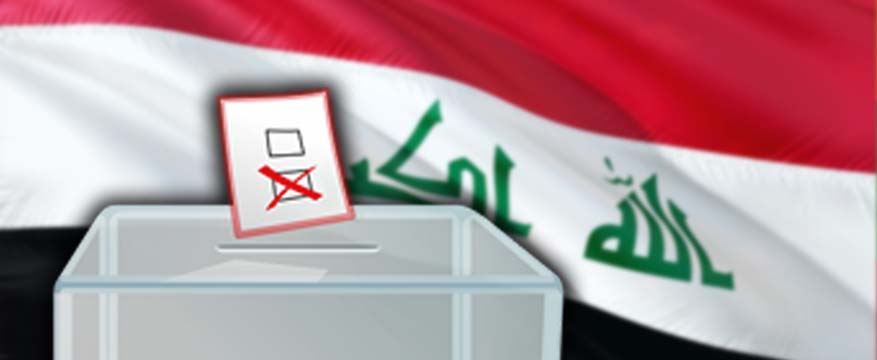
The results of the most recent Parliamentary and Assembly of Experts elections in Iran indicate that Iranians are increasingly unhappy with the conservative establishment in the country. The Reformists or moderates and pro-Rouhani group of ‘Hope’ secured a majority in the Assembly of Experts and also won more seats than their rival conservatives or Principlists in the Majlis or parliament. The elections for the two bodies were held on February 26, 2016.
Importance of PM Modi’s Visit to Iran: Opportunities and Challenges for India
Prime Minister Narendra Modi’s visit to Iran is important in many ways. It came at a time when India is seriously contemplating activation of its ‘Look West’ policy and banking on Iran as a ‘gateway’ and provider of a corridor to Central Asia and Afghanistan. The visit sought to revitalise India–Iran bilateral relations which has passed through an uncertain phase during the last decade.
The End of the End of History
On December 25 of this year we will mark 25 years since the collapse of the Soviet Union. Many in Russia and the West were optimistic about the seeming imminent integration of Russia into a Western-led liberal democratic global order. The United States, in particular, fresh off its ‘victory’ in the Cold War, could hardly restrain its triumphalism as it stood astride the world as the sole superpower.
The New Role of Russia in the Greater Eurasia
Key ideas associated with Eurasianism were developed in the 19th century. The narrative of classical Eurasianism in the 1920s was developed to explain that Western civilisation was not superior to other civilisations. Eurasia is the middle continent between other parts of Europe and Asia. There are historical, geographical, and cultural impetuses here which push nations to different forms of association. However, the dissolution of the USSR gave birth to new ideologies and political theories of Eurasianism.