The 3rd India-Central Asia Regional Conference was jointly organised by the Institute for Defence Studies and Analyses (IDSA), New Delhi and the Institute for Strategic and Regional Studies (ISRS) at Tashkent during November 6-8, 2003. Fifty participants from about 20 countries participated in the Conference. Representatives from organisations like the World Bank (WB), European Union (EU), European Bank for Reconstruction and Development (EBRD) and Organisation for Security and Cooperation in Europe (OSCE) also participated. Uzbek Foreign Minister Mr.
China’s Defense Paper 2002 was released in December 2002. It is the fourth such Paper since 1995. It clearly affirms that the top priority for China is to continue its modernisation. In particular, economic security is given more attention. The report also echoes the guidelines set at the 16th National Congress of the Communist Party for the future development of China. As stated in the White Paper, “The 16th National Congress of the Communist Party of China… has drawn up a grand blueprint for China’s development in the new century.
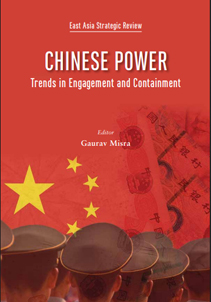
The East Asia Strategic Review is an annual publication of the East Asia Centre, Manohar Parrikar Institute for Defence Studies and Analyses (MP-IDSA), New Delhi. The current volume titled "Chinese Power: Trends in Engagement and Containment" intends to present an Indian perspective on China's strategic outreach in the East Asian region under President Xi Jinping. It analyses how Beijing employs the instruments of diplomacy, economy, military and political outreach to engage with the regional countries and how US presence influences the regional dynamics.
Central Asia is the northern frontier of the Islamic world hitherto unaffected by fundamentalist wave. The Soviet developmental legacy still remains as a bulwark against potential extremist threats emanating from Pakistan and Afghanistan. However, behind the secular settings a major shift to a far more religious pattern of society is underway in the region.
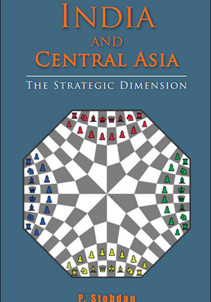
Over the years, India has been taking renewed interest in enhancing its strategic presence in Central Asia, but it is yet to capitalise on various opportunities and potentials. India's full membership into the SCO now opens up an opportunity for a closer engagement with region but New Delhi still lacks a political-strategic clarity.
This book is an attempt to provide an overview of the political and strategic process at work in Central Asia since its emergence in 1991 and the intricate issues that impinge on India. The book is mostly about identifying critical points that are important for evolving a sound Central Asia policy in India.
The book does not in any sense purport to be an academic endeavour on Central Asian studies but merely a narrative, as well as, an analytical account and a result of author's own self-education and understanding gathered through extensive interactions with wide sections of people in Kyrgyzstan and Kazakhstan, especially with the think tanks, academia, government officials and the diplomatic community. The chapters in book are capsulated to provide analyses of the impinging issues that shape the dynamic interplay between Central Asia's internal polity and its external outlook. The book contains aspects critical for enhancing India's strategic presence in the region.
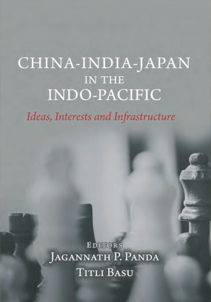
This book analyses the competing power politics that exists between the three major Asian powers - China, India, and Japan - on infrastructural development across the Indo-Pacific. It examines the competing policies and perspectives of these Asian powers on infrastructure development initiatives and explores the commonalities and contradictions between them that shape their ideas and interests. In brief, the volume looks into the strategic contention that exists between China's "Belt and Road Initiative" (BRI; earlier officially known as "One Belt, One Road" - OBOR) and Japan's "Expanded Partnership for Quality Infrastructure" (PQI) and initiatives like the Asia-Africa Growth Corridor (AAGC) and position India's geostrategic and geo-economic interests in between these two competing powers and their mammoth infrastructural initiatives.
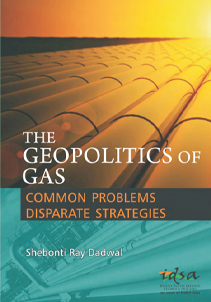
This volume looks at the evolving gas market and the various players who influence it -- both as producers and consumers. However, some of the players, such as Australia and the new African producers, as well as Japan and South Korea, the two largest LNG consumers, have not been included as their approach tends to be more commercial than geopolitical in nature.
The rise of India and China as two major economic and political actors in both regional and global politics necessitates an analysis of not only their bilateral ties but also the significance of their regional and global pursuits. This book looks at the nuances and politics that the two countries attach to multilateral institutions and examines how they receive, react to and approach each other’s presence and upsurge.
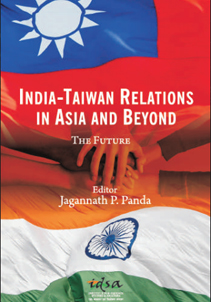
This volume is an outcome of the conference that the Institute for Defence Studies and Analyses (IDSA) in collaboration with the Taipei Economic and Cultural Center (TECC) held in New Delhi on 8 December 2015 at IDSA. The conference was organised in New Delhi to commemorate the 20th anniversary of the establishment of their respective Representative Offices in Taipei and New Delhi by India and Taiwan.