The complexity and interconnection of global supply chains has heightened the realisation of the need for supply chain resilience and self-reliance in production.
Humanitarian consequences of nuclear weapons use, dreadfully experienced in the bombings of Hiroshima and Nagasaki, has had little policy impact on concluding a genuine nuclear disarmament convention.
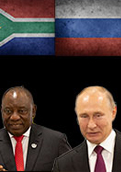
The controversy regarding President Vladimir Putin’s participation in the BRICS Summit at Johannesburg due to an arrest warrant by the International Criminal Court highlights the geopolitical overtones and inadequacies of...
UCAVs can impose a major decision dilemma on the adversary and act as a part of a combined arms offensive in the air, in their role as ‘loyal wingman’ for...
The paradox of South Africa being formally neutral on Russia’s invasion of Ukraine, yet parallelly deepening military relationship with Russia, is continuing to strain US–South Africa relations.
The suggestions being offered to rein in the advancements in AI need to move into the domain of regulation, to ensure that the unwarranted effects of these technologies do not...
India’s participation in mini-lateral frameworks together with the US and its West Asian allies has been a transformative development in its West Asia policy.
Policy-makers need to recalibrate modernisation programmes from the earlier focus on traditional military capability needs to a mix of kinetic and non-kinetic hybrid war-fighting capabilities.
Indonesia can emulate best practices from neighbouring countries like Malaysia vis-à-vis deradicalisation programmes to further reduce recidivism rates.
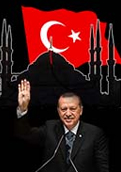
Turkish President Recep Tayyip Erdogan’s May 2023 electoral victory reinforces the dominance of political Islam in Turkiye’s politics, despite economic crises.
Japan’s proposal to host a NATO liaison office in Tokyo is facing objections from NATO members like France, who view it as a distraction from the alliance’s core task of...