Coming close on the heels of the Chinese decision to build two nuclear power plants at Karachi as well as the continued assistance to the construction of nuclear reactors at Chashma, Xun Wang’s case raises the worrying spectre of spotty Chinese implementation of and compliance with international export control regulations.
US-China relations have assumed a new dimension in recent years and reflect
the various tensions and mutual suspicions that are inevitable in a relationship
between an existing super power and a rising super power.
China’s strategic culture professes both peace and aggression, but is also marked by ruse and deception. Military power is a necessary ingredient of great power status and China’s current rise includes hi-tech military modernisation that can challenge the only contender it has in the Asia-Pacific, the United States.
The 'Cheonan' incident has prodded and expedited the strategic comeback of the US in East Asia. The US offer to mediate the territorial disputes over islands and seabed minerals in the South China Sea at the ASEAN Regional Forum (ARF) meeting in July 2010 has provoked harsh criticism from the Chinese. This US diplomatic move appears to be a premeditated one to substantially diminish the influence of China in the region, to re-secure its own strategic forward military presence and to signal that it is not yet time for China to acquire absolute control over this critical waterway.
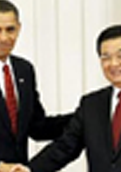
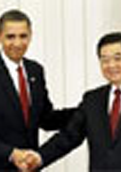
While the Chinese president’s trip concluded with a joint statement and the signing of trade and investment deals, it achieved little in terms of addressing pressing global problems and bilateral issues.
Primarily because of the uncertainties surrounding US-China relations, the Hu-Obama summit ended in a stalemate with both leaders agreeing to disagree on important matters.
NASA Administrator Charles Bolden visited Beijing on October 16 – 21 to discuss cooperation in manned space flight. While one swallow does not make a summer, it may signal that the US may be considering greater engagement with China in outer space, particularly manned flight.
Sino-US rivalry has been simmering for the past many years, as China has replaced Russia in the American scheme of things as its most potent adversary.
Even though the report is fairly cautious in what it says and does not highlight anything new, the reactions on the Chinese side have not been that positive.