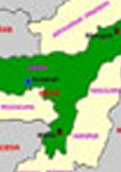
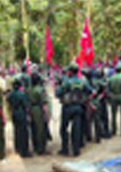
Although law enforcement agencies have been receiving timely reports about growing Maoist activities in Assam, it appears that they do not pay much attention to the issue.
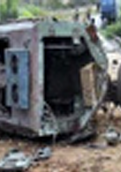
After a systematic study of the MPV deployed in anti-Maoist operations, the Maoists have come to the conclusion that “There is no such thing as a mine proof vehicle”.
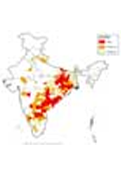
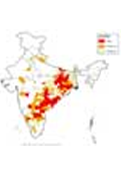
The ‘Golden Corridor Area’ was reportedly formed by the Maoists in February 2008. It is essential to check their presence in this area in order to curtail their finances as well as to avoid industrial sabotage.
India’s internal security situation in 2011 was relatively better than in previous years. To ensure that 2012 also turns out to be a quiet and secure year, New Delhi not only has to consolidate the gains made in 2011 but also undertake new initiatives to address these gaps.
The Maoist military machine has acquired a certain versatility and lethality and the security forces would have to possess and display immense capacities to fight the Maoists militarily.
Kishanji’s demise would put to rest any possibility of negotiations between the Maoists and the government in West Bengal. His killing in an encounter, no doubt a serious blow, does not practically undermine the Maoists’ capabilities either in West Bengal or at the pan-India level. However, his unique organizational ability shall be missed.
While businesses, especially industries, face a real dilemma, the long-term solution is the isolation of the Maoists by winning over the local people through projects that benefit local communities.
The urban presence and activities of Naxalites of the Communist Party of India (Maoist) [CPI (Maoist], or Maoists, in short, is fast picking pace. On May 13, police arrested 10 Maoists in Pune, though they actually belonged to West Bengal. Nine of them were working as casual labourers while their leader was using the cover of a labour contractor. Four pistols and Naxalite literature running into 300 pages were recovered from their possession.
The sense of a liberated zone is apparent as one enters Chitrakonda, with three storey tombs painted in red with the comrades’ name and a hammer and sickle dotting the arid landscape.