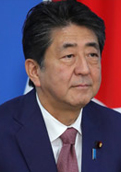
Abe Shinzo made his mark as an astute statesman in international politics with intellectual bandwidth and a global vision to conceptualise grand strategic constructs such as the Free and Open Indo-Pacific anchored on universal values.
With Chinese unilateral efforts altering the maritime status quo on the one hand and lack of progress on denuclearisation of the Korean Peninsula on the other, Japan is revisiting its strategic options.
Considering that the US, Japan, Australia and India are committed to working for a free, open and rules-based Indo-Pacific, it is time for India’s strategic partners to review their cartographic positions on India’s borders.
The world is witnessing a geopolitical shift from the North Atlantic to the Indo–Pacific region. US power is in relative decline with a steady build-up of Chinese power, wealth and influence. The last 15–20 years have also seen the rise of India. Against this backdrop, Australia’s reconceptualisation of its strategic frame as the Indo–Pacific widens its geopolitical canvas and elevates India’s importance for multiple Australian interests and objectives.
Australia has a vital interest in preventing the Indian Ocean Region from becoming an arena of great power rivalry, including between India and China. The 2013 Defence White Paper clearly delineates the Indo-Pacific as an area of supreme importance to Australia. Developing a close strategic partnership with India is an important part of this strategy.
The emergence of the Indo-Pacific as a new geopolitical frame of reference is embedded in the growing strategic importance of the maritime domain and the rise of states that have demonstrated the ability to ‘transcend’ their respective subregions. However, the Indo-Pacific remains a concept in its infancy, as evidenced by the fact that it continues to compete with alternative conceptions of regional space in Asia.
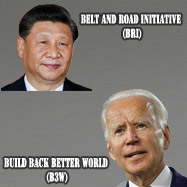
This book analyses the competing power politics that exists between the three major Asian powers - China, India, and Japan - on infrastructural development across the Indo-Pacific. It examines the competing policies and perspectives of these Asian powers on infrastructure development initiatives and explores the commonalities and contradictions between them that shape their ideas and interests. In brief, the volume looks into the strategic contention that exists between China's "Belt and Road Initiative" (BRI; earlier officially known as "One Belt, One Road" - OBOR) and Japan's "Expanded Partnership for Quality Infrastructure" (PQI) and initiatives like the Asia-Africa Growth Corridor (AAGC) and position India's geostrategic and geo-economic interests in between these two competing powers and their mammoth infrastructural initiatives.