The longer the price of oil remains depressed, India, like other major oil importers, will not only increase its dependence on crude imports, but it will also become more dependent on OPEC.
Recent developments in India-North Korea relations make it an opportune time for India to devise a new approach for its engagement with the Korean Peninsula that will help redefine its Act East policy.
India and Germany have complementarities that can make them effective partners. However, converting these complementarities into possibilities will depend on creating conducive environment for greater German investment and a better understanding of the German world view.
Today, military historians as well as those dealing with colonial South Asian history tend to overlook the fact that during the First World War, the Indian Army was Britain’s strategic reserve. It vitally despatched over 150,000 troops to the Western Front to shore-up the British sector in the critical period of 1914-1915. To the Indian sepoys who crossed the kala pani to fight, die or be wounded in the trenches there, it was a jarring initiation into modern industrialised warfare.
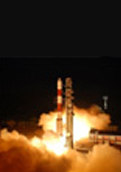
While India has a reliable vehicle for launching less than 2 tonne satellites into LEO, it lacks the necessary infrastructure to obtain larger commercial benefits from this capability.
Modi would find the Eurasian dynamics at odds with his vision of containing China along with the United States. He will have to display pragmatism for building greater convergence with China and Russia.
To reconnect with the Eurasian market, India needs to explore the option of a direct land-link through China, i.e., reviving the traditional Ladakh-Xinjiang axis as the natural gateway to Eurasia.
There are also grey areas to the extent that the professional and hierarchical relationship which the Consultants will have with regular IFS officers is yet to be clearly outlined.
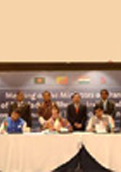
The BBIN-MVA would enable seamless sub-regional connectivity, deeper integration on economic issues and people-to-people contact between the four counties.
India’s ministerial presence at the Shangri La Dialogue could have helped India to articulate the new government’s strategic thought and expand from the realm of military diplomacy to defence diplomacy. So, is India’s defence establishment blind to probable benefits of participating in the Dialogue or are they thinking differently?