While Brexit would provide a fillip for an India-UK FTA, Britain staying on in the EU is also likely to be of value given its role as a gateway to Europe.
A sound sensor array in the Indian Ocean could prove invaluable for India which has a major anti-submarine warfare handicap and a lack of operational submarines.
India cannot be taking other than a cooperative position if it wants to genuinely exploit opportunities that SCO processes may offer. Any policy on connectivity underpinned by a spirit of rivalry will make India an odd one out.
It is time to bring together the interests of the Indian and Chinese governments toward seeking the common goal of saving the Himalayas and the people living in the region.
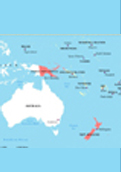
This backgrounder explores three issues: the strategic significance of the South Pacific for India, the advantages that India enjoys over China in the region, and the status of India’s relationship with Papua New Guinea in the light of the recent visit by President Mukherjee.
India’s engagement with its neighbours received a policy reinvigoration after the National Democratic Alliance (NDA) government assumed power and announced its ‘neighbourhood first’ policy. The first sign of this policy was visible when Prime Minister Narendra Modi invited all the heads of state of the neighbouring countries for his oath-taking ceremony, on May 26, 2014. India’s interest and engagement with the South Asian Association for Regional Cooperation (SAARC) has also intensified in the past few years – from being a reluctant player to driving the regional economic agenda.
Maritime security challenges in the Indian Ocean Region continue to be an issue of concern and this effective regional mechanism needs to be strengthened to deal effectively with them.
It is important to generate understanding among the youth about the basic concept of national security and the impact it has on human security and economic growth.
India needs to take advantage of its historically close and friendly ties with Tanzania and step up its ties with that country, perhaps by scheduling a visit of Prime Minister Modi at the earliest.