India should carefully understand the evolving foreign policy strategy of China under Xi Jinping, and notably, his worldview, and try to position bilateral relations accordingly.
On 19 December 2017, three days ahead of the scheduled 20th Round of Indo-China border talk between the Indian National Security Advisor (NSA), Ajit Doval, and China’s State Councillor, Yang Jiechi (the details of which are yet to be made public), the daily Times of India reported a statement by China that the Doklam standoff posed a ‘major test’ for the bilateral ties and that lessons should be learnt from it to avoid a similar situation of its kind in the future.1 China’s statement was made in the context of the face-off between Indian Army and China’s People’s Liberation Army (PL

The standoffs in Doklam and North Korea offer insights on how crisis stability remains subject to the complexities of deterrence, especially in theatres with multiple nuclear-armed states, and what this entails for disarmament.
While the crisis has been defused for the time being, the probability of a future flare up cannot be ruled out. A holistic strategic review ought to be carried out over a wide spectrum and in a multi-dimensional manner with specific timelines.
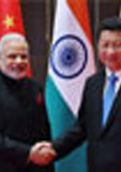
Will the next meeting between PM Modi and President Xi at the Xiamen BRICS Summit lead to what Foreign Secretary Jaishankar has described as a new equilibrium?
India’s decision to review the imports of IT products from China could turn out to be its Achilles Heel, given that they constitute a key constituent of Chinese exports to India.
The Doklam standoff has emerged as a litmus test for India in terms of how resolutely it can stand up against an increasingly hegemonic China to protect the interests of Bhutan as well as its own interests.
To effectively cope with the PRC’s hostile attitude, India needs to reduce the power asymmetry, articulate a clear security policy based on a realistic threat assessment, reorganise the military, and revamp the border management mechanism.
The strategic dialogue should focus on the fundamentals of shared beliefs and political culture, and be supported by widespread engagement at the provincial, governmental and academic levels.
It is time to engage in a dialogue process not just for enhancing strategic trust but also to think more cunningly about how to benefit from China’s riches by gaining access to Chinese credit and technology, and securing markets for Indian products.