G.G. Dwivedi

Publication

India’s Quest for Self-Reliance in Defence Sector: Reality Check, Challenges and Way Ahead

Given the prevalence of numerous security challenges, India’s high dependence on other countries for its defence requirements stands out as a serious vulnerability in the national security calculus. In 2024, India was the world’s second largest importer of arms, just behind Ukraine, with an 8.3 per cent share of global arms import between 2020 and 2024. This situation can be largely attributed to the absence of a long-term national security strategy due to lack of political direction marked by narrow perspective, absence of indigenous research and pursuit of technology unaligned with military objectives. While India did make attempts to achieve self-reliance, the outcome was not encouraging due to the domination of the public sector entities coupled with bureaucratic gridlocks. To revitalise India’s armament industry, the present government, under ‘Atmanirbharta/Make in India’ programme has initiated slew of defence reforms which include rationalisation of the acquisition and procurement procedures, restructuring of the key bodies and the establishment of Defence Industrial Corridors (DICs). While the Indian defence industry has made significant progress, including increase in defence exports, it still has a long way to traverse. The indigenisation achieved so far pertains to low-technology items, while many initiatives remain non-starters. To overcome these challenges, India requires a National Security Strategy, robust ecosystem to scale up the overall industrial capacity, deregulation and initiation of a second round of defence reforms.

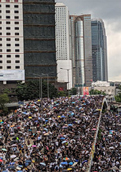
Hong Kong on the Edge

The current impasse in Hong Kong poses the most serious challenge to the Chinese leadership since the territory’s integration with the mainland. The “One Country, Two Systems” arrangement appears to be at crossroads, set to be consigned to the archives well before its expiry date.