India’s success as the 2026 BRICS Chair will depend on its ability to keep the group focused on functional cooperation, including health, climate finance and multilateral reform.
Cooperation and collaboration through multilateral institutions are the only viable and sustainable responses to a world grappling with complex global challenges.
Additional responsibilities related to South and Central Asian Affairs on the new US Ambassadorial nominee could lead to diminished attention on the India–US ‘Global and Comprehensive Strategic Partnership’.
US President Donald Trump’s recent statements have equated India and Pakistan while it is clear that Pakistan is the perpetrator of terrorism and India the victim.
While President Muizzu’s policy towards India is short-sighted and lacks sophistication, India should continue with its measured response given the geo-strategic importance of Maldives.
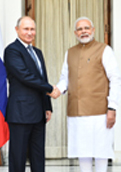
President Putin’s short but highly consequential visit to India and the launch of the 2+2 format have imbued new dynamism into the bilateral partnership. There might be a few areas of divergence between the two sides but spheres of convergence are much greater.
The May 8, 2021 India-EU Summit in Portugal is expected to further invigorate and provide a fresh direction to the bilateral relationship, even as both sides grapple with bilateral, regional and global challenges.
The rapidity and selflessness with which India rolled out millions of doses of vaccines as aid despite the massive requirements of its own vaccination drive, is being particularly appreciated by world leaders and observers.
Even as Kazakhstan is making slow but steady progress towards further democratisation and openness of its political system, jostling by elites to secure their positions ahead of the ultimate exit of first President Nursultan Nazarbayev from the political scene, is set to grow.