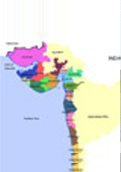
Instead of beefing up army/police/paramilitary forces in the towns and cities, the government needs to urgently take measures to prevent entry of the criminal and terrorist elements at or close...
Lack of manpower, training, infrastructure and coordination coupled with other systemic flaws and state government’s indifference to coastal security have severely undermined the efficacy of the coastal security apparatus.
It is true that any negotiation with the outfit in the absence of Paresh Barua is going to meet only with partial success, but if the government manages to mainstream...
Apart from the reluctance to move beyond viewing the India-US relationship through the prism of US-China or even US-Pakistan ties, the Indian political leadership and the strategic community have so...
While countries need to adopt each other’s best practices to deal with the hydra-headed monster called terrorism, there cannot be a magic bullet or a single successful counter-terror strategy.
Why are the two largest democracies – India and the United States – starkly different when it comes to tackling terrorism? The answer to this perplexing question could lie in...
Linked to the terrorist goal of intimidation of a targeted population, there is an inherent objective to spread fear and undermine the declared values of the targeted political system by...
With the killing of three women and a nine-year old girl, absurdly described as a police informer, the Naxals have lost any moral justification that they may have had to...
“There is credible information of ongoing plans of terrorist groups in Pakistan to carry out fresh attacks. The area of operation of these terrorists today extends far beyond the confines...
A nation-state has a responsibility to protect its women as equal citizens, yet states like Pakistan have structurally disenfranchised women from state protection by making them half citizens and reducing...