There are five fundamental deficiencies in India’s maritime security mechanism that will need to be addressed by the newly appointed National Maritime Security Coordinator (NMSC), to prevent a recurrence of a 26/11 scenario.
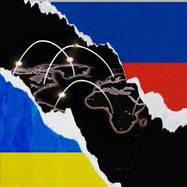
The Russia–Ukraine conflict, as well as Russia’s 2014 annexation of Crimea, draw light on the geopolitics of data routing and the usage of the Border Gateway Protocol (BGP) as a tool of control.
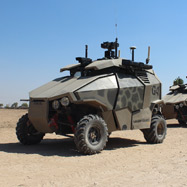
The confluence of technologies like Artificial Intelligence, Machine Learning and Cloud Computing with Unmanned Ground Vehicles has created enormous opportunities for creating intelligent autonomous systems both in the commercial and defence sectors.
While the end state of the Russia–Ukraine conflict is still afar, an analysis of the conflict and war fighting so far, shows that there are enough early lessons for the strategic and military practitioners to decipher and take note of.
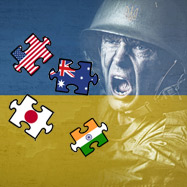
While the US, Japan and Australia have taken an overtly critical stand towards Russia at the UN, India has abstained from all the UN resolutions condemning Russia. Will divergent views over the Ukrainian crisis weaken the Quad, is a pertinent question being examined in this issue brief.
India’s Arctic Policy can be seen as the first step towards developing a whole-of-government approach on India’s engagement with the region. The policy seems to be inclusive and participative wherein India offers its readiness to “play its part and contribute to the global good”.
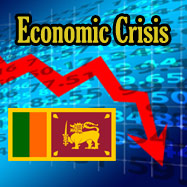
Depletion in foreign reserves has led to uncertainty about Sri Lankan government’s ability to account for import of essential items and debt servicing. Analyses of government’s policy measures and global geopolitical-economic developments suggest that a state of uncertainty is hovering over Sri Lankan economy.
The recent Joint Statement issued after the Quad Foreign Ministers’ meeting in Melbourne indicates the grouping’s drive towards institutionalisation and coming close to achieving a concrete mandate for its existence.
With the failure of moderates’ Western outreach in the aftermath of US withdrawal from the JCPOA, the conservatives, now in power in Iran, are looking for a long-term partnership with Russia which would bring stability in their shared neighbourhood, geoeconomic opportunities and also weaken the influence of moderates and reformists.
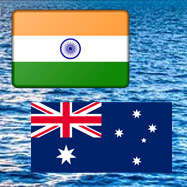
The Indo-Pacific construct has significantly enhanced the strategic salience of both India and Australia in a multipolar region. While the two nations have considerably deepened their strategic partnership, there is scope for much more improvement in several sectors.
The Ukrainian crisis is less about Ukraine, its national politics and foreign policy, and more about redefining the rules not only of the European security but also the international order and the simmering rivalry between great powers in particular.
Chinese reaction to the Sri Lankan Ministry of Agriculture’s decision to cancel an organic fertiliser deal has demonstrated that China is not hesitant to take punitive action against Sri Lanka, if its interests are not fulfilled.
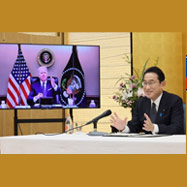
Prime Minister Kishida Fumio gave a resolute call for pursuing “realism diplomacy for a new era” in his Diet deliberations. How strategically innovative and politically effective will it prove in pursuing Tokyo’s national interests in the US–China–Japan calculus?
The Srijan defence indigenisation portal is a limited but concrete example of the implications of India’s defence indigenisation efforts for key strategic partners like Israel.
China’s growing military presence in Central Asia through military exercises, trainings, extending arms assistance and building military infrastructure, has an impact not only on the region but also its neighbours, especially Russia and India.
Emmanuel Macron has been aiming high for the EU to reiterate its global positioning through a series of policy reforms. With him at the helm of the Council of the EU, there exists an opportunity to translate it into reality.
Recurrent coups have increased the existing political instability in Mali. A major issue has been the unidimensional focus of the international community and regional players in providing only military support without adequately pushing for strengthening of Malian government apparatus.
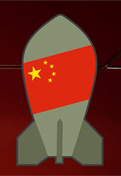
The rapid increase in the nuclear forces of China, as revealed in the 2021 Pentagon Report, is a matter of serious concern. Several countries are undertaking exercises to ascertain the strategic and security implications of the feared expansion of the Chinese nuclear stockpile.
As India’s strides in the renewable sector are increasingly gaining pace, it gives an opportunity to assess what potential challenges and opportunities arise for India in the face of China’s growing dominance in the renewable energy industry.