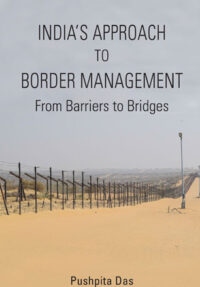
The Centre focuses on issues that challenge India’s internal security. Secessionist movements based on ethnic identities in the Northeast and Jammu & Kashmir have been contesting the Indian state through violent means for decades. The Left Wing Extremism movement based on Marxist-Leninist ideology is engaged in a struggle to overthrow the democratic structure of the Indian state. Intermittent terrorist attacks perpetrated by foreign and home grown terrorist groups have been disrupting peace and political order in the country. Infiltration, illegal migration, and trafficking of arms and narcotics are not only breaching the country’s international borders but are also aggravating its security situation. The research efforts of the Centre are focused on analysing the trends, patterns, causes, and implications of these threats and challenges, and suggesting policy alternatives. The Centre’s research agenda includes: left wing extremism, insurgencies in the Northeast India, cross border terrorism and militancy in Jammu and Kashmir, global and national trends in terrorism, management of India’s international borders and security of its coasts.
The Centre also undertakes various projects entrusted by the Ministry of Home Affairs and the National Security Council Secretariat on matters internal security. The Centre has a mix of civilian scholars and officers deputed from the armed forces and central armed police forces.
The Centre has a bilateral agreement to collaborate with the Border Security Forces’ Institute for Border Management and Strategic Studies.
India’s intelligence co-ordination and assessment apparatus at the national level and counter-terrorism policies remain mired in the days of innocence.
The Government of India may perform a catalytic role to activate community-cum-family based endeavours with particular emphasis on sports-related and youth activities—areas in which the Manipuris naturally tend to excel.
India needs to shore up its military capabilities in Arunchal Pradesh in order to strengthen its defence posture in the eastern sector, improve governance in the state to gain the full backing of the people and adopt a flexible stance to resolve the border dispute with China.
The Ibobi dispensation would do well to understand that the people have reiterated their faith in democracy and have cold shouldered the militants, if not politely shown them the door.
For the first time one of the main leaders of the NSCN (IM) has acknowledged the sincerity of the Union government to resolve the Naga issue, signalling a distinctive change of discourse.
Given the hostility of Assamese society to indiscriminate violence and the sullied image of the ULFA leaders due to their amassing of wealth through extortions, the anti-talk ULFA faction would not be able to make a determined come back.
Although law enforcement agencies have been receiving timely reports about growing Maoist activities in Assam, it appears that they do not pay much attention to the issue.
Over the last few years, there is a whole range of instances where the common Kashmiri has become a part of the Indian landscape, by persevering through the difficult circumstances in the Valley and making something worthwhile of their life.
The 13/2 terrorist attack against the Israeli diplomat exposes India to the possibility of a more potent and professional group, which may have already raised the capability levels of indigenous terror cells and created a threat which is both real and potent.
At the core of the Kashmiri discourse on the shortage of power is the distribution of water resources that was agreed to between India and Pakistan through the instrumentality of the Indus Water Treaty.