Obama’s signal that the United States seeks to exit in 18 months will be viewed with scepticism by fence sitters in Afghanistan who will identify the victor as the one who endures.
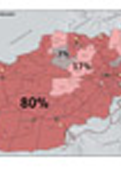
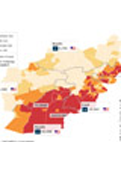
Ideally, ISAF and NATO should concentrate on urban population centres along with the ANA, and the ANA should also deploy outside the towns and cities to dominate the hinterland and crack down on Taliban controlled areas.
The United States is facing serious economic problems, and Obama seems to have drawn the lesson that national security is not just about military strength but that it is equally about the economy, partnerships and diplomacy.
Trade relations between the US and China only exemplify the true nature of a complex interdependent international environment. This limits or alters foreign policy options for both countries and directly connects domestic politics to international politics. In this game of interdependence, China has stayed ahead due to unique domestic political and economic conditions.
Notwithstanding the community formation ideas in different shapes coming from Japan and Australia, the EAS came out with as many as 42 deals on issues ranging from outstanding trade and economic matters to the launch of a human rights commission.
Post an American exit, China is likely to increase its investments in Afghanistan, provide employment to hundreds of unskilled Afghan workers, and assume the role of regional stabiliser.
The US may have satiated its desire for vengeance but risks losing sight of its objectives due to liberal atavism, inconstancy, pusillanimity and operational ineptitude.
The Futenma issue is therefore unlikely to be allowed to derail the decades-old alliance relationship, irrespective of the fact that there is now a government in Japan headed by the DPJ, which was in the opposition since World War II.
America’s new strategy in Afghanistan needs to be based on the concept of `connect–hold–build’, where the ground troops surely and silently `connect’ with the local population.
Stability in Afghanistan is vital and the stakes for India are high, but the time is over for sitting on the fence. India requires a larger strategic vision, not a blueprint for town and country planning.