United States of America (USA)

Post-1998 Track II Diplomacy Between India and the USA: An Indian Perspective

The paper discusses Track II Diplomacy between India and the United States with a special focus on the post-1998 period. Its scope is limited to Track II deliberations that have relevance to foreign policy issues. An effort has been made to assess the efficacy of Track II exercises on the basis of certain parameters developed for this study.

The findings of the study are based on the responses received from some experts in this field in India during direct interviews with them. Thus, the paper provides an Indian perspective.

US Policies in the Post-Cold War Era: An Indian Perspective

The 9/11 attacks on the US have forced the Americans to believe that the US secret service agencies are helpless against the attacks of the committed suicide squads. These attacks and the subsequent happenings in Afghanistan and Iraq have not only removed the illusion of post-Cold War peace, but also heightened uncertainty and insecurity in the world. ‘Operation Iraqi Freedom’ has given a clear message to the countries of the world that the US can go to any extent to protect its national interests even if the mandate of the world community is against such actions.

US and the Asia-Pacific: Future of the Alliance System and Regional Security

The article critically looks at relevance of the US alliance system in the Asia-Pacific in the context of the changing nature of threats and challenges that the U.S. is confronted with in the light of American military intervention in Afghanistan and Iraq. The paper argues that the American policy in Asia, which so far has been premised on bilateral alliances and forward deployment, is likely to undergo fundamental changes because the principal partners, South Korea and Japan, may not be very useful either in counter-terrorism efforts or low-intensity wars.

Dominant European Powers and the US at Odds: The Transatlantic Media Divide

During the latest war in Iraq, which has now come to an end, there has been a persistent debate on why Europe and the US are not seeing eye-to-eye on the question of war and a host of issues pertaining to it. The discourse so far has speculatively tried to probe whether the whole mismatch is about culture, history or about the power game in the post-Cold War world.

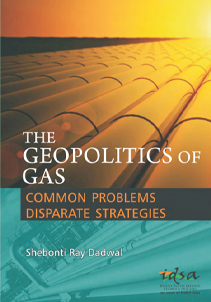
The Geopolitics of Gas: Common Problems, Disparate Strategies

  • Publisher: Pentagon Press

This volume looks at the evolving gas market and the various players who influence it -- both as producers and consumers. However, some of the players, such as Australia and the new African producers, as well as Japan and South Korea, the two largest LNG consumers, have not been included as their approach tends to be more commercial than geopolitical in nature.

  • ISBN 978-81-8274-900-9,
  • Price: ₹ 995
  • E-copy available