In the wake of Donald Trump’s election as U.S. president, Japan is weighing the geopolitical and geo-economic implications of the new economic and security policies that his administration may adopt.
Although President-elect Trump has declared his intention to deregulate the fossil fuel sector in order to make America less energy import dependent, but over time, this will lead to an increase in supplies in an already over-supplied oil (and gas) market and send prices into a further downward spiral.
If the history of the world is the world’s court of justice, history will rate Obama, the 44th President of the United States, among the top ten of the holders of that high office.
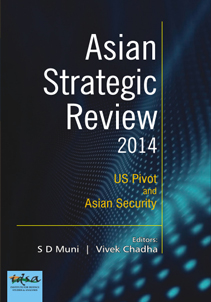
Recently, the nature of the presence of the US in the Asia-Pacific has undergone significant changes. At least three developments—the rise of an economically and militarily resurgent China, a renewed counter-strategic approach by the US to rebalance its engagements with its close regional allies like Japan, the Philippines, South Korea and Australia, and the US’ efforts to expand and extend strategic cooperation with India and Vietnam—show that there are new emerging differences between the US and its four major non-NATO allies in the Asia-Pacific.
The Obama administration has acknowledged that their policy on Cuba has been the most outdated one, considering it has been more than two decades since the Cold War got over. The biggest knot in their relationship has been untied, but that doesn’t spare the leaders from confronting some age-old pinpricks.
While the Wassenaar Arrangement has instant recall in nuclear circles, it has only recently become a source of turmoil in cybersecurity, after the US Bureau of Industry and Security published rules that are applicable to cyber technologies.
While the Iran nuclear agreement will be the primary agenda of the summit, there are expectations that other regional issues will also be raised: the campaign against the Islamic State, removal of Syrian president Bashar al-Assad, the ongoing war in Yemen and the Israel-Palestine conflict.
There are many reasons for the decision of the people to vote for the Republican Party in these elections ranging from economy,
governance, foreign policy decisions, the mid-term factor and mostly President Obama's unpopularity