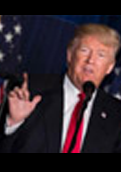
President Trump’s victory and his subsequent actions after assuming the presidency seem to indicate the US withdrawal from a leadership role towards a degree of insulation from world affairs.
The DNC and En Marche hacking instances offer a peek into the future: data leaks and cyber means of electoral intervention are likely to become an unfortunate and inevitable part of the electoral process.
A rational decision maker in the White House does not have all options on the table and cannot start a war without South Korea’s consent. Diplomacy is the only option and this is as obvious as obvious can be.
What to make of the combination of Trump’s missile strikes in Syria, changes of mind about China and Russia, warnings to North Korea, signals about scaling up military presence in Afghanistan, and outreach to Turkey?
Given the advertisement surrounding the use of MOAB, it is possible that the Trump administration is signalling to its adversaries the very lethal weapons in its arsenal and its willingness to use them.
Guterres has to forcefully convey to the new US administration that the US-UN relationship is a two-way street, where both parties need each other to safeguard their respective interests.

The reaction to President Trump’s utterances and avowed policies on the Mexican border wall and tariff has attracted strong criticism. It is surprising that Trump, who is known to view developments and decide on policies in transactional terms, appears short-sighted and unwilling to view the implications of his policies in a long-term perspective.
China’s aggressive rise and strained relations with its Asia-Pacific neighbours—a region with immense economic and strategic potential—have forced the US to forge a strategy of Asian rebalance. Besides making China suspicious, this strategy has aroused the possibility of a new cold war. In contrast, though India’s relations with China have improved considerably since the 1962 War, the unresolved border issue and the threatening Chinese attitude do not allow India to trust China.