If the Sinhala opposition parties, the Tamil TNA, and the Muslim parties support the common candidate, there is a possibility that they may be able to defeat Mahinda Rajapaksa. But will these political forces come together?
India has stepped up its efforts to cooperate on security issues in general and on maritime security in particular with its island neighbours in the Indian Ocean Region (IOR). At the core of this lies the initiative to build a trilateral maritime arrangement with Sri Lanka and the Maldives. It is in this larger context that the second National Security Advisors’ (NSAs) meeting took place in Colombo in July 2013.
Despite its abstention, India will continue to be evaluated negatively in Sri Lanka for its approach to the Tamil issue. Moreover, Colombo is also taking steps which may unnecessarily complicate bilateral relations.
It would appear that India accorded preponderance to the broader interests of national sovereignty before its final stand on the UNHRC resolution. But it also cannot be oblivious to the likelihood of parallels being drawn in the future by some countries inimical to India.
De-militarisation per se is a sensitive issue, however, it is of essence that the Sri Lanka armed forces` role vis-à-vis the provincial administrations or even in the larger island-nation context be re-defined. It be a good idea to engage the SLA in project activities and relocate the army throughout the country and not be exclusively entrenched in the northern province.
It is essential to codify the executive instructions for administering the northern province under some statutory rules issued at the provincial level with concurrence of the central government. The statutory rules should not leave any scope for cognizance of directives or advice from the provincial governor to the provincial officials.
There is a view in Lanka that CHOGM did more harm than good and many, in fact, are questioning the wisdom of the government to host the meet. However, the pro-government media is defiant with editorials strongly denouncing the threat of international investigation as interference of Sri Lanka’s internal affairs and it is expected to galvanize popular support for Rajapaksa.
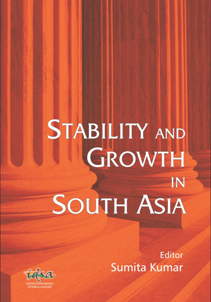
This book examines the forces and processes which have led to relative political stability or unleashed trends in that direction in some countries of South Asia. It also delves into the factors that have stimulated economic growth in some countries, and impeded economic growth in others. Eminent authors from the region examine how far the positive political and economic trends in the region are irreversible or lend themselves to internal convulsions or external influences. There is also a focus on how far inter-state relations within the region have led to stronger intra-regional co-operation, particularly in the economic field.
It has been a year of unstable regional security with the endless conflict in Afghanistan, Pakistan’s half-hearted struggle against the remnants of the al Qaeda, Sri Lanka’s inability to find a lasting solution to its ethnic problems and Nepal’s new found inclination to seek neutrality between India and China.