What the country needs is goodwill and support from all stakeholders inside and outside to move the reconciliation process forward and build on the peace, and all at the right pace.
It was almost certain that the United National Front for Good Governance coalition would outperform the United People’s Freedom Alliance in Sri Lanka’s parliamentary elections.
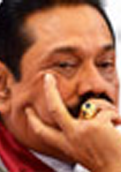
For the people of Sri Lanka the choice is clear – between de-democratisation represented by Rajapakse and his supporters, and democratisation represented by Sirisena and his political allies.
The concept of a ‘primordial homeland’ has been at the centre of Sri Lanka’s armed struggle, in which both Sinhalese and Tamil nationalisms have used claims of ancient and ethnically determined territories to justify their right to self-determination, territorial sovereignty and armed struggle.
After a successful visit by Prime Minister Narendra Modi to Colombo in March, Indian policy elite are hopeful that the new Sri Lankan government will roll-back some of the geopolitical concessions made by the Rajapaksa regime to Beijing, thereby restoring India’s primacy in its near neighbourhood. India’s policy elite are hopeful that Maithripala Sirisena, the new president, will roll back some of the geopolitical concessions made by his predecessor to Beijing, thereby restoring Indian primacy in its near neighbourhood.
Prime Minister Modi’s visit is likely to improve the atmospherics to a significant extent, introduce a positive vibe into the process of engagement and serve as a stepping stone for deepening the relationship further.
During the Rajapaksa years, Sri Lanka experienced jobless growth, similar to the experience of many African countries where Chinese investment had increased exponentially in the last decade.
Sirisena will be expected to restore both the institutional checks and balances which saw an erosion as a result of the 18th Amendment to the constitution and the faith of minorities in the pluralistic character of Sri Lankan society.