India’s objective lies not in offsetting the interests of either the US or China but to walk towards its own destiny of serving humanity and global peace.
Modi would find the Eurasian dynamics at odds with his vision of containing China along with the United States. He will have to display pragmatism for building greater convergence with...
Joining SCO could help India get out of the current tight geopolitical spot - wedged between a wall of Pakistani hostility and fear of cooperating with China.
Over the years, the scope of SCO has widened to include the interests of countries beyond the Eurasian space. For India to capitalise on the SCO it must have a...
The prospects for new states becoming SCO members seem remote. The new clause that requires all heads of the member states to sign the membership document is the main obstacle...
In June 2011, the Shanghai Cooperation Organisation (SCO), an influential Eurasian regional grouping consisting of Russia, China and four Central Asian Republics (CARs)—Uzbekistan, Kazakhstan, Tajikistan and Kyrgyzstan—formally approved a ‘memorandum...
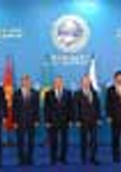
While expanding the SCO mandate and reviewing the membership criteria are some of the issues that make the Beijing summit a vital one, contentious global issues like Iran also lend...
Today, the situation in Afghanistan is mired with the geopolitics of regional and extra-regional players. Bringing stability to the country is a major challenge for the international community. The Shanghai...
Russia has considerably enhanced its international position by leveraging Western weaknesses stemming from the unwinnable war in Afghanistan and the adverse impact of the financial crisis, as well as Western...