India–Saudi Arabia: Evolving Cooperation on Renewable Energy
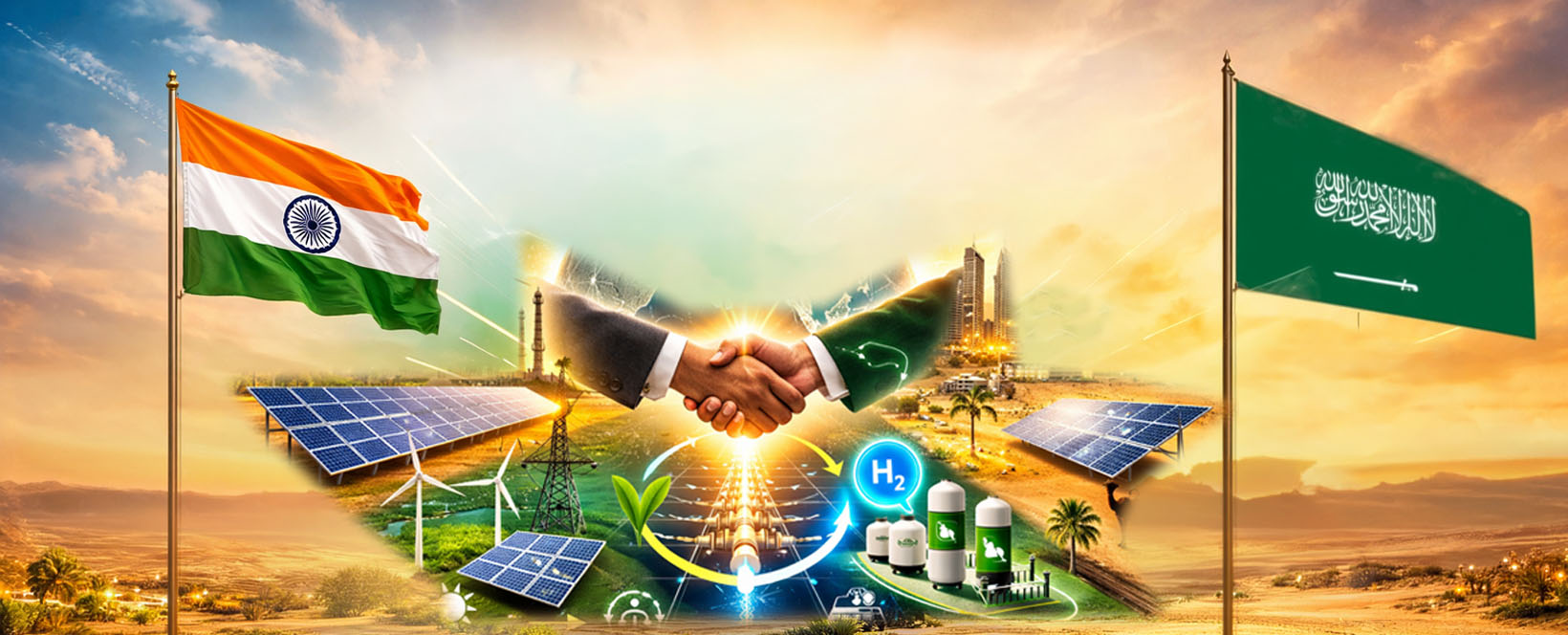
The evolving partnership between New Delhi and Riyadh in renewable energy has assumed heightened strategic importance.
This paper provides a policymaker's overview of a highly scalable, revolutionary, renewable energy technology, Space-Based Solar Power (SBSP), and evaluates it utility within the context of the Indo-US strategic partnership.
The Latin American countries of Argentina, Bolivia and Chile have emerged as the lithium bank to fuel green transition.
India has deepened renewable energy cooperation with countries of the GCC in the last few years.
Even as Vietnam has Southeast Asia's largest installed solar and wind power capacity, coal will continue to be the country’s primary source of energy till 2030.
Energy transition is defined as a structural change in energy balance when some fuels are replaced with others. This process of structural transition, however, does not lead to an ultimate replacement of fuel but a substantial reduction of its share. Liquefied Natural Gas (LNG) is widely considered a transition fuel that will eventually lead to a shift to the renewable energy system. LNG provides an alternative to coal, oil, nuclear energy and pipeline gas, as it helps reduce carbon emissions.
With the Russian invasion of Ukraine, the expansion of energy routes and suppliers has assumed increased urgency not only for Poland but EU as a whole. To what extent this diversification of supply chain will reduce Poland’s overt reliance on Russia, remains to be seen.
As India’s strides in the renewable sector are increasingly gaining pace, it gives an opportunity to assess what potential challenges and opportunities arise for India in the face of China’s growing dominance in the renewable energy industry.
India and GCC share convergence of ideas and interests along with the political will to collaborate in the hydrogen energy sector. There is a need to provide impetus to the public and private partnerships in this sector as it has a strong potential for growth in future.
China has managed to establish an edge in solar energy manufacturing and technology, and any shift in its solar policy is likely to affect countries looking to increase their solar energy capacity.