Pakistan

Talks with Taliban: war by other means

The situation in Pakistan today is very fragile. Despite the progress on the democratic front, there is a sense of helplessness on how to tackle the menace of terrorism. Unlike in the past, Islamabad appears quite weak vis-à-vis Taliban while it keeps chanting its commitment to talks with TTP, despite the provocation and retaliation from the army.

Yaqoob-ul-Hassan | March 03, 2014 | IDSA Comments

Eating Grass: The Making of the Pakistani Bomb, by Feroz Hassan Khan

Brigadier Feroz Hassan Khan (Retd) brings to bear the right credentialsto this six year effort under review. The career Pakistan Army officer andJohns Hopkins University graduate (1989–91), currently a faculty memberof the Naval Postgraduate School, Moneterey, California, spent the lastdecade of his 32 year service (he retired in 2001) dealing with nuclearissues in key positions.

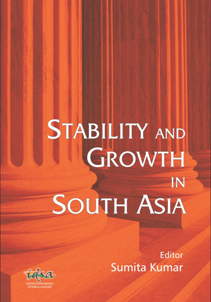
Stability and Growth in South Asia

  • Publisher: Pentagon Press

This book examines the forces and processes which have led to relative political stability or unleashed trends in that direction in some countries of South Asia. It also delves into the factors that have stimulated economic growth in some countries, and impeded economic growth in others. Eminent authors from the region examine how far the positive political and economic trends in the region are irreversible or lend themselves to internal convulsions or external influences. There is also a focus on how far inter-state relations within the region have led to stronger intra-regional co-operation, particularly in the economic field.

  • ISBN 978-81-8274-748-7,
  • Price: ₹ 995/-
  • E-copy available

Elections in Pakistan: Perspectives from Pakistan-Occupied Kashmir

In the run-up to the May 2013 elections, the political scene in Pakistan was absorbed in electoral rhetoric, active campaigning and a hectic poll process. It culminated with an expected set of results—the Pakistan Muslim League-Nawaz (PML-N) emerged victorious and took the reins of power after a decade and a half. The incumbent Pakistan People’s Party (PPP) was nearly decimated and Imran Khan’s Pakistan Tehreek-e-Insaf (PTI) marginalised.

A Year-end Security Review of Southern Asia

It has been a year of unstable regional security with the endless conflict in Afghanistan, Pakistan’s half-hearted struggle against the remnants of the al Qaeda, Sri Lanka’s inability to find a lasting solution to its ethnic problems and Nepal’s new found inclination to seek neutrality between India and China.

Gurmeet Kanwal | December 31, 2013 | IDSA Comments

Iftikhar Choudharys Judicial Activism and the Pakistani state: Time for a rethink?

While Choudhary’s judicial activism did restore a degree of sanity to Pakistan, it came at the expense of other institutions and created an imbalance of power. Pakistan, to become a normal state, at peace with itself and the world at large, may not need institutional tinkering but a wholesale rejigging of its institutional superstructure and substructure.

Wajahat Qazi | December 18, 2013 | IDSA Comments

Will Pakistan’s India Policy under Sharif Shift Strategically?

The May 2013 parliamentary elections in Pakistan led to a stable government under the Pakistan Muslim League-Nawaz (PML-N). Prime Minister Sharif promised a shift of the country’s India policy. Given his track record, the current pressing economic and security imperatives and recent improvements in Indo-Pakistan trade relations, the popular optimism is understandable and the first steps of rapprochement are to be expected.