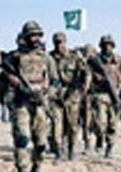
The idea of abolishing FATA as a distinct administrative entity and merging it with KP led to a country-wide debate, with some commentators pointing to the futility of the merger...
Nuclearisation of the Indian subcontinent limits conventional military options available to India for punishing Pakistan’s employment of terrorism as a tool of state policy. While India has rightly balanced the...
Will the Pakistani civilian leadership cease to placate the Islamist forces for their own electoral gain? Will the Army rein in the jihadis it has been using to retain “strategic...
There is no documentary evidence to substantiate the Pakistani claim that Pakistan had entered into any voluntary safeguards agreement with the IAEA in respect of KANUPP.
Pakistani planners are increasingly prone to recognize the many links between water, food, and energy security. The construction of new large dams is seen by many as a concrete measure...
The military and scientific leadership of Pakistan has given clear signals that tactical nuclear weapons have a vital role in Pakistan’s nuclear weapons policy. Developed to lower Pakistan’s nuclear threshold,...
A growing Sino-Russian-Pakistani maritime nexus in the IOR poses a challenge to India’s influence in the Indian Ocean and heralds a potential change in the Asian balance of maritime power.
ADB’s yet another deferment of the decision on funding the DBD is a serious setback to Pakistan’s relentless efforts to obtain funds for constructing this mega hydro-power project on River...
Why is the Pakistan military pushing for Military Courts when the country already has a fairly robust Anti Terrorism Act together with designated Anti Terrorism Courts set up specifically to...