The message President Kyaw took back from New Delhi is that India stands ready to support Myanmar in every possible way on its march to security, reconciliation and prosperity.
This backgrounder offers an overview of the two most challenging concerns for Myanmar’s democracy – ethnic unrest and economic hardships – and how the new government is planning to address these issues in particular and also more generally the influence of the Tatmadaw in politics.
China wants to regain the position it once enjoyed under the military government in Myanmar. However, its efforts at securing a direct access to the Indian Ocean through Myanmar are unlikely to see an early fruition.
Aung San Suu Kyi’s National League for Democracy (NLD) won by a landslide majority in the openly contested elections Myanmar held on Sunday, November 8, 2015.The NLD won a convincing majority with 255 seats in the lower house, 135 in the upper house and 496 seats in the state and regional legislatures. This paves the way for election of President of its choice and forming a government. The election had 33.5 million eligible voters (over 18 years) of Myanmar’s 52 million population.
It may be an over-optimistic assessment to expect the present Thein Sein regime to achieve a substantive and comprehensive political accord in the run-up to the elections.
Myanmar and India have followed separate political paths only to find it converging in recent times. Myanmar’s other neighbour China has had a much larger footprint in the country. India has to calibrate its engagement with Myanmar to not just effectively implement its Look East policy but also manage the contiguous border regions of Northeast India given the ground realities.
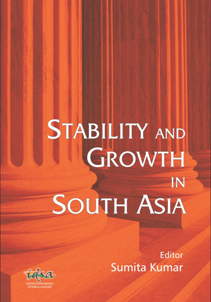
This book examines the forces and processes which have led to relative political stability or unleashed trends in that direction in some countries of South Asia. It also delves into the factors that have stimulated economic growth in some countries, and impeded economic growth in others. Eminent authors from the region examine how far the positive political and economic trends in the region are irreversible or lend themselves to internal convulsions or external influences. There is also a focus on how far inter-state relations within the region have led to stronger intra-regional co-operation, particularly in the economic field.
Burma’s two decades-old alignment with China, which was always an uneasy one, is being reordered to better reflect Burmese national interests. In an attempt to reach out to the West, partial democratisation has been permitted. The military remains highly influential in Burmese politics, but its desire to avoid the pitfalls of over-dependence on Beijing, together with confidence that separatist movements pose a lesser threat than in the past, have led to a loosening of political control.
With increased cross-border mobility, instantaneous access to information and easy reach to small arms, terror attacks in India are finding new targets.
After years of political and economic isolation, Myanmar is opening up to investment particularly in the energy sector. There are however, accompanying uncertainties and risks.