While businesses, especially industries, face a real dilemma, the long-term solution is the isolation of the Maoists by winning over the local people through projects that benefit local communities.
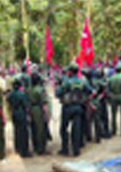
The sense of a liberated zone is apparent as one enters Chitrakonda, with three storey tombs painted in red with the comrades’ name and a hammer and sickle dotting the...
When the Maoists’ urban movement attains criticality among industrial labour, they may seek to organise sabotage and industrial strikes. Security forces will have to be prepared to respond to urban...
Countering ideological narratives, effective communication of developmental measures to the people, and adherence to the principle of judicious use of force should form integral elements of India's strategy to counter...
Though fuzzy, there are linkages between Indian and Nepalese Maoists and these have been either admitted or downplayed by all sides –– the Nepalese Maoists, the Indian Maoists and the...
The Naxal problem has become the biggest internal threat to the country. Especially after the comments of the Prime Minister Manmohan Singh in 2007, it has become a matter of...
Left Wing Extremism (LWE) presents a serious internal security challenge to India that needs careful and coordinated policy response from both the security front and the development front. For the...
There are no shortcuts to overcoming the grave Naxal threat to our democratic way of life. Broadening the mandate by handing over the problem to the army is neither fair...