What are the domestic factors shaping India’s foreign policy? Where do the opportunities and challenges for India’s foreign policy come from? How can India navigate a tumultuous world where events within and beyond its control impact it?
Ambassador Rajiv Sikri answers these questions in Strategic Conundrums: Reshaping India’s Foreign Policy, which builds on his previous book Challenges and Strategies: Rethinking India’s Foreign Policy (Sage Publications, 2009). Strategic Conundrums does not have a core argument but takes stock of Indian foreign policy developments since 2014, when the National Democratic Alliance (NDA) led by Prime Minister Narendra Modi came to power for the first time, while also analysing the trajectory of diplomatic relations with countries before 2014. The depth of analysis in the book, drawn from the author’s experience as a diplomat is evident in the analysis.
The German government’s 2011 abstention from the United Nations Security Council vote on military intervention in Libya raised questions about Germany’s role in the international system. By abstaining, Germany broke with its Western allies and aligned itself with four of the BRICS countries: Brazil, Russia, India and China. Its ‘non-Western’ act unleashed a debate on the future of German foreign policy. This contribution aims to provide an understanding of Germany’s new foreign policy.
Pakistan's most critical foreign policy concerns in the last few years relate to the deadlock in relations with India and India's success in isolating Pakistan regionally and internationally due to its support for terrorism. The success of its peace overtures to Afghanistan are constrained by various complexities arising out of the unpredictable situation in Afghanistan and the role of external powers like the US, China and Russia in the ongoing peace process.
The study analyses the nature of Southeast Asia-India defence relations, the reasons for the growth in ties and more important, the consequences of the defence relations.
In this monograph, the Arthasastra framework is used for examination of dynamics of fragility in South Asia, with a case study of Pakistan. The insights into human policy choices which can be gleaned from the treatise have a timeless quality that can offer a fresh perspective to today’s policy makers. It can be open to further academic investigation and debate for developing and enriching an indigenous strategic vocabulary.
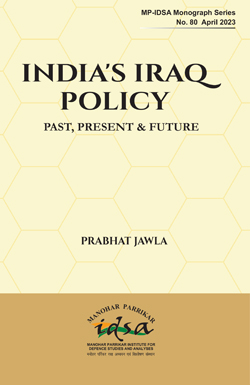
Iraq is a vital country in the region. It is an essential part of India's extended neighbourhood, not merely for its ineluctable geopolitical and geo-economic significance but also because of its vast historical and cultural importance.
Publisher: Institute for Defence Studies and Analysis (IDSA)
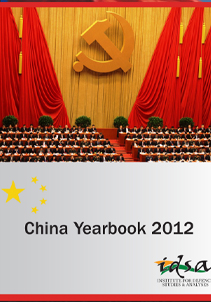
An annual publication from the Institute for Defence Studies and Analyses (IDSA), The China Yearbook 2012 is a round-up of events and issues of significance that occurred in China during the past year and covers important developments in the domestic and foreign policy spheres.
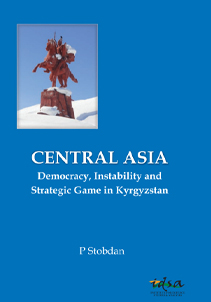
Central Asia remains both stable and unpredictable after 20 years of its reemergence. The states here continue to undergo complex nation-building process, which is far from complete. The book is an attempt to provide an overview of political and strategic processes at work in the region by taking the case of Kyrgyzstan – tracing the events erupted since 2005 and more after 2010.
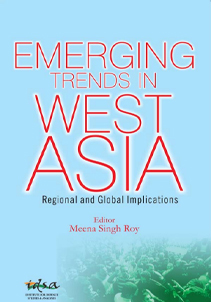
The book provides an in-depth assessment of socio-political, economic and strategic trends unfolding in West Asia. It also explores options for India to enhance existing relations with the West Asian region in a much more meaningful manner. The complexities of West Asia have been systematically explored by scholars, diplomats and specialists to advance the understanding of West Asia's political and strategic architecture.