Afghanistan

Early Trends in Afghan Elections: Abdullah Leads the Show

According to a poll survey, 29 per cent supported the candidacy of Ashraf Ghani, a former World Bank expert, who is one among the three probable candidates President Karzai is supposed to favour. Abdullah Abdullah, runner up in 2009 Presidential poll and former foreign minister, came second with 25 per cent. The rest of the candidates, including Abdul Rab Rasoul Sayaaf, polled under 10 per cent.

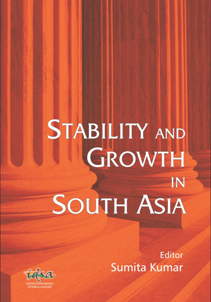
Stability and Growth in South Asia

  • Publisher: Pentagon Press

This book examines the forces and processes which have led to relative political stability or unleashed trends in that direction in some countries of South Asia. It also delves into the factors that have stimulated economic growth in some countries, and impeded economic growth in others. Eminent authors from the region examine how far the positive political and economic trends in the region are irreversible or lend themselves to internal convulsions or external influences. There is also a focus on how far inter-state relations within the region have led to stronger intra-regional co-operation, particularly in the economic field.

  • ISBN 978-81-8274-748-7,
  • Price: ₹ 995/-
  • E-copy available

Pakistan on the Brink: The Future of Pakistan, Afghanistan and the West by Ahmad Rashid

There is immense strategic interest in the Af-Pak region. The US has spent over half a trillion dollars in Afghanistan and perhaps billions in Pakistan. NATO has spent money and sacrificed lives in Afghanistan. India, China, Russia and Iran have given large packages of aid and invested in the country. What will be the future of these trillion dollars of expenditure, huge investments and diplomatic efforts in the Af-PaK region? Ahmad Rashid offers a disturbing answer. Pakistan is on the brink of collapse, Afghanistan is in the midst of a civil war, and the Americans are pulling out.

India and China: Exploring Partnership in Afghanistan

In this final part of the Policy Paper series, P Stobdan deliberates that if India and China make a calibrated move for working together in Afghanistan, the outcome could be more harmonizing than conflicting. So when India reviews its post-2014 Afghan policy, the China factor should not be seen in a zero-sum perception for many in the West may press India playing a countervailing role to China.

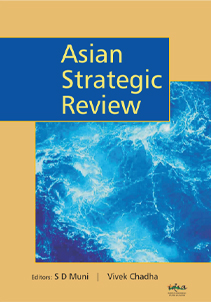
Asian Strategic Review 2013

  • Publisher: Pentagon Press

It would not be a cliche to describe the strategic contours of Asia as being at the crossroads of history. A number of significant events are influencing the likely course that the collective destiny of the region could possibly take in the future. Some of the key issues and trends have been analysed in this year’s Asian Strategic Review

  • ISBN ISBN 978-81-8274-719-7,
  • Price: ₹ 1295/-
  • E-copy available

The Afghan Game: Interests and Moves

In Afghanistan, the third Great Game is still on. The end of US–NATO combat operations in Afghanistan by the end of 2014 will be read by many as ‘Obama’s Vietnam’, but the retention of a small number of troops and several military facilities by the US in that country will be a source of worry for countries such as Russia, Iran and Pakistan who are concerned about US motives and moves in regard to the region, especially Central Asia’s energy resources which are already a target of international competition.

Changing the Course of War through Targeted Aerial Strikes: Afghanistan 2008–09

Targeted air strikes remain a cornerstone fighting technique in modern counter-insurgency and other military operations. Yet, scholars and practitioners remain divided on the question of the efficacy of this battle mechanism. This article examines some of the underlying assumptions made in their previous analyses, and serves to nuance those approaches. Specifically, it looks at war, not as a static phenomenon but rather as a constantly evolving environment—one where such aerial campaigns affect insurgent counter-strike capabilities and decisions.