Search Result


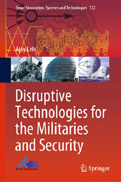
Disruptive Technologies for the Militaries and Security

  • Publisher: Springer, Singapore
This book debates and discusses the present and future of Disruptive Technologies in general and military Disruptive Technologies in particular. Its primary goal is to discuss various critical and advanced elucidations on strategic technologies. The focus is less on extrapolating the future of technology in a strict sense, and more on understanding the Disruptive Technology paradigm. It is widely accepted that technology alone cannot win any military campaign or war. However, technological superiority always offers militaries an advantage. More importantly, technology also has a great deterrent value. Hence, on occasion, technology can help to avoid wars. Accordingly, it is important to effectively manage new technologies by identifying their strategic utility and role in existing military architectures and the possible contributions they could make towards improving overall military capabilities. This can also entail doctrinal changes, so as to translate these new technologies into concrete advantages.
  • ISBN: E-book-978-981-13-3384-2, Hardcopy-978-981-13-3383-5
  • Price: E-book- € 118.99, Hardcover- € 139,99
Read More

Saudi Arabia–Iran Contention and the Role of Foreign Actors

The Sykes–Picot Agreement, the Iranian Revolution, the Gulf Wars, and other events that have unfolded after the Arab Uprising (the Arab Spring), have altered the course of West Asian history. Saudi Arabia and Iran are the new architects determining the course and its trajectory; also significant is the presence of foreign powers. As is evident that oil has been a crucial factor behind the West’s interests in the region. The article states that the new Cold War can be explained as a variance between Iran and Saudi Arabia; and the situation manoeuvred by foreign actors.

Read More

Assessing India’s Engagements in the INSTC and Analysing its Implications on India’s Commercial and Strategic Interests

The INSTC formalised by India, Iran and Russia at the start of the new millennium to develope an alternative transport system linking India with Central Asia and Eurasia floundered for long due to scepticism and neglect by its member states. However, the withdrawal of the UN sanctions against Iran, the steady expansion of the Chinese influence in the region through the OBOR, and the urgent requirement of the land-locked Central Asian countries to gain maritime access offer new incentives for the member states to reinvigorate the project.

Read More

East of India, South of China: Sino-India Encounters in Southeast Asia

With the rise of China and the rising tension between the China-South China Sea littoral states, the Southeast Asian region has emerged as a pivot of international politics. Changing US policy towards Southeast Asia in the wake of China’s rise and India’s initiatives to expand its footholds in the region have further mainstreamed the region. China has shown reluctance in accepting the involvement of an extra-regional power in South China Sea affairs. Therefore, it is likely that in the coming years, the region will witness extensive overt and covert competition between two rising powers.

Read More