Nepal Floods and the Missing Quad Response
- November 27, 2026 |
- Issue Brief
Summary
Nepal drew support from individual Quad members after the Bhote Koshi floods. The Quad also acknowledged India’s leading role as the first responder. However, support to Nepal as part of the Quad institutional architecture could have demonstrated that its humanitarian commitments are not confined to the maritime Indo-Pacific.
On 17 November 2026, the Quad Leaders’ Summit took place in Manila, where the four leaders described the grouping as a partnership of action that, among other things, responds to disasters with “life-saving assistance”.[1] That commitment carried particular weight because humanitarian assistance and disaster relief (HADR) had been the Quad’s foundation. The coalition had formed in response to the 2004 Indian Ocean earthquake and tsunami. The principle was later institutionalised when the four countries established the Quad Partnership on HADR in the Indo-Pacific in 2022.
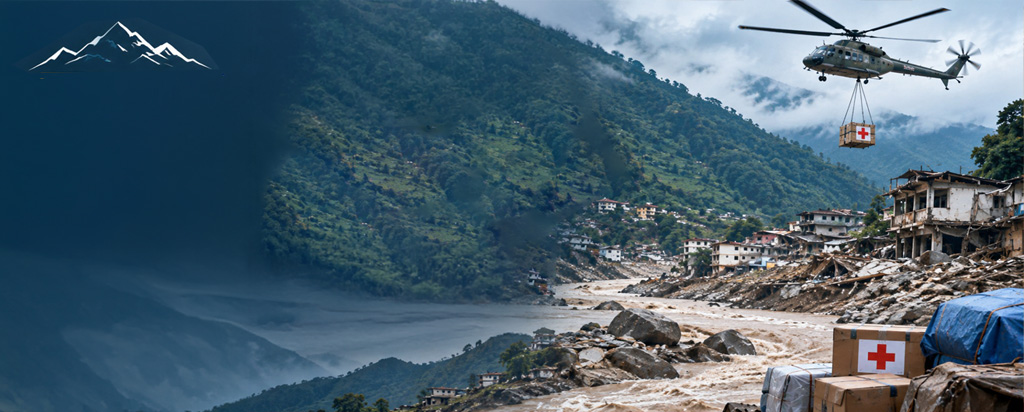
Nepal presented the next occasion for that commitment to take concrete form. The flash floods of 26 August 2026 along the Bhote Koshi river system resulted in significant loss of life, property damage and widespread disruption.[2] Official figures record approximately 1,460 deaths, with more than 5,000 persons still listed as missing.[3] The disaster drew support from every Quad member, and the foreign ministers acknowledged in Atlanta the significant support to Nepal from all Quad countries and India’s leading role as first responder.[4] The Quad already had relevant instruments, including the HADR Partnership, the Indo-Pacific Logistics Network procedures, and joint exercises such as the Annual Joint Humanitarian Assistance and Disaster Relief Exercise (AJHE-26).
Therefore, the following questions are constructive: Why did the four members not mount a joint or coordinated response to the Nepal floods, despite an established framework for cooperation? Was the cause operational, driven by the affected state’s preferences, or due to political strains within the grouping, including recent tensions in US–India relations? In the long term, can the Quad build a coordinated approach to disaster relief in the Himalayan region that serves its members, Nepal and wider South Asia?
Going Back to First Principles and the HADR Framework
During the 2004 Indian Ocean tsunami, the four countries—the United States, India, Australia and Japan—cooperated through the Tsunami Core Group to facilitate emergency assistance to affected countries. This arrangement mattered because four countries with different strategic priorities could collaborate on a common regional challenge without a formal military alliance. The diplomatic grouping that took shape in 2007 soon lost momentum. When it was revived in 2017, it became increasingly associated with maritime security, the rules-based order and the strategic implications of China’s rise. This evolution broadened the Quad’s agenda considerably; however, it sidelined the humanitarian cooperation that had initially brought its members together.[5]
Disaster response nonetheless remained one of the areas in which the members’ interests converged most readily, and the scale of the need was considerable. For instance, Asia-Pacific recorded 2.04 million disaster deaths between 1970 and 2022, compared with 1.42 million in the rest of the world, and floods accounted for 52 per cent of the more than 7 billion people affected.[6] Recognising this importance of humanitarian cooperation, Quad leaders announced the Quad Partnership on HADR at the Tokyo Summit in May 2022.[7] Subsequently, on 23 September 2022, Quad foreign ministers signed the Guidelines for the Quad Partnership on HADR in the Indo-Pacific, establishing a framework for coordinating disaster-response activities. The guidelines emphasise respect for the sovereignty, territorial integrity and leadership of affected countries, requesting international assistance as a prerequisite for coordinated action. They also uphold the humanitarian principles of humanity, neutrality and impartiality, while seeking to complement existing national, regional and international mechanisms. Rather than establishing a unified operational command, the framework allows members to undertake joint operations or coordinate individual contributions under their respective national command structures.[8]
To strengthen operational preparedness, the guidelines envisaged biannual consultations, tabletop exercises, information-sharing and coordination with international humanitarian organisations. Since 2022, the Quad has conducted five annual HADR tabletop exercises, along with logistics coordination exercises in 2025 and 2026.[9] Importantly, the Quad’s coordinated responses to the 2024 Papua New Guinea landslide and 2025 Myanmar earthquake demonstrated its commitment to practical HADR cooperation.[10] While these initiatives indicate progress in readiness and interoperability, they do not necessarily demonstrate the Quad’s ability or willingness to undertake coordinated relief operations during actual emergencies. The Nepal floods highlight this distinction between establishing a framework and operationalising it, as a collective response remains dependent on the affected country’s request, the nature of the disaster and the inclination of Quad members to coordinate their assistance.
Why Quad’s Engagement Matters in Nepal?
Financial Institutions such as the Asian Development Bank approved a US$ 5 million emergency grant, the World Bank made up to US$ 170 million in emergency financing available, and the Fund for Responding to Loss and Damage provisionally allocated US$ 21.6 million to Nepal. However, in an interview with the Anadolu Agency on the sidelines of COP31 in Antalya on 11 November 2026, Nepal’s Foreign Minister Shishir Khanal criticised the lengthy approval procedures governing climate disaster finance, arguing that delays of several months were unjustified when affected communities required immediate assistance.[11]
Additionally, Nepal’s disaster response was affected by policy missteps, particularly its initial refusal of foreign search-and-rescue assistance, which it reversed within a day after recognising the need for specialised expertise. Limited forensic capacity, difficulty accessing affected sites, and shortcomings in emergency coordination further exposed gaps in domestic response capabilities. These delays and capacity gaps provide scope for the Quad to augment assistance through coordinated technical, logistical and financial support.
First, addressing Nepal’s humanitarian and reconstruction requirements and their regional consequences. The floods affected nearly 1,00,000 people, including more than 30,000 children.[12] The destruction of over 100 bridges, 13 hydropower dams and 23 schools compounded the humanitarian crisis by disrupting access to essential services, transport networks and electricity infrastructure.[13] The resulting reconstruction requirements are estimated at US$ 4.8 billion, about 10 per cent of Nepal’s GDP. The disaster’s consequences also extend beyond Nepal’s borders. Damage to hydropower infrastructure disrupted electricity generation, prompting Nepal to suspend electricity exports and resume imports from India, while surging water levels reached the Gandak Barrage in Bihar.[14]
The disruption showed how damage to critical infrastructure in Nepal can ripple through interconnected energy and transport networks across the region. Reconstruction, therefore, cannot be confined to restoring damaged assets; it must also account for their vulnerability to future disasters. The Quad could contribute through technical and financial support for resilient hydropower infrastructure, transport connectivity and disaster-resistant public infrastructure, building on its engagement with institutions such as the Coalition for Disaster Resilient Infrastructure (CDRI). This would connect Nepal’s immediate reconstruction requirements with the longer-term objective of strengthening regional infrastructure resilience.
Second, extending the geographical scope of the Quad’s HADR engagement to the Himalayan region. The Nepal floods highlighted specific gaps in disaster monitoring and early-warning arrangements in the Himalayan region. These risks are particularly consequential in the Himalayas, where settlements, hydropower facilities and transport corridors are concentrated along fragile river valleys and steep terrain. Moreover, the region has experienced Glacial Lake Outburst Flood (GLOF) events, including the 2016 outburst in Tibet that affected Nepal’s Upper Bhote Koshi hydropower plant and Arniko Highway, and the 2023 outburst in Sikkim, which caused extensive flooding along the Teesta river basin.[15]
However, investment and cooperation remain limited. Prime Minister Balendra Shah also underscored the need for such cooperation in his address to the 81st United Nations General Assembly on 24 September 2026. He proposed a Himalayan Climate Resilience Mechanism involving Nepal, India and China, emphasising cooperation in cross-border disaster assistance.[16] This proposal reflects Nepal’s growing recognition of the need for institutionalised arrangements to address shared climate vulnerabilities. The Quad could apply its satellite-based capabilities, including its Satellite Data Portal, to glacial lake monitoring, flood-risk assessment, and identifying vulnerable infrastructure, in collaboration with regional scientific institutions. This would require timely hydrological data-sharing between upstream and downstream countries. India has a direct stake in such cooperation given the downstream risks of GLOFs and its early-warning initiatives around high-risk lakes.
Third, mobilising the complementary capabilities of the four members. A coordinated Quad approach could bring together resources and expertise that individual bilateral assistance may not provide at the same scale.[17] India’s geographical proximity, logistical access and experience in responding to disasters in its neighbourhood give it an important role in facilitating relief and reconstruction. Japan can contribute its experience in earthquake recovery, resilient infrastructure and multi-partner reconstruction planning, including its participation in the post-disaster needs assessment following Nepal’s 2015 earthquake.
Australia and the United States can supplement these efforts through technical expertise, financial assistance, satellite-based monitoring and logistical support. Although individual commitments have been announced, including India’s US$ 1.62 billion package, more than US$ 36 million from the United States and AUD 26 million from Australia, alongside a smaller, largely emergency-focused contribution from Japan, these were announced separately and have not constituted a common Quad reconstruction framework.[18] Therefore, a coordinated division of responsibilities could help align assistance with Nepal’s identified priorities, reduce duplication and address gaps in recovery financing and technical capacity. The value of such an arrangement would lie not merely in aggregating financial contributions but in combining the members’ respective capabilities within a coherent response.
Fourth, engaging Nepal through multilateral mechanisms while respecting its strategic autonomy. Nepal’s constitution enshrines non-alignment, and security-linked initiatives drew domestic scrutiny during the 2019 Indo-Pacific Strategy controversy. A visibly Quad-led effort risks raising sensitivities, but association with the Quad is not a pre-condition for cooperation. The members can pool resources through institutions already active in Nepal, such as the World Bank. Plural partners also serve Nepal’s autonomy, since Nepal can balance India and China diplomatically but cannot balance geography. A host-led, multilaterally channelled model would show that the Quad can act in South Asia on the host’s terms.
Fifth, it would demonstrate the operational value of the Quad’s HADR partnership. The Quad’s earlier coordinated responses demonstrated its capacity to facilitate practical humanitarian cooperation. Nepal presents an opportunity to apply this experience in a different geographical and diplomatic context. Although all four members assisted Nepal individually, their contributions were not coordinated under the HADR framework, and the Manila leaders’ release, while describing the Quad as responding to disasters, lists no disaster-related deliverable. The members can close that gap now by consulting Kathmandu on whether coordination would be welcome. Nepal’s recovery financing decisions are still pending, so there is time for such a step to shape outcomes. Doing so would show that the partnership can turn institutional commitments into collective action, which is what distinguishes a functioning mechanism from an exercise programme.
Growing Challenges within Quad
The absence of a coordinated Quad response to the Nepal floods raises questions about the partnership’s ability to translate its HADR commitments into action in a politically sensitive and operationally demanding setting. Four constraints are relevant: the geopolitical considerations surrounding Quad engagement, the procedures governing the activation of its HADR framework, changing US commitments and bilateral tensions, and the maritime orientation of its strategic identity.
The Quad’s strategic convergence does not mean its members share identical regional priorities. Unlike Japan and Australia, India is not bound by a formal military alliance with the United States and has sought to preserve flexibility in its external partnerships. Its continued engagement with Russia and its approach to managing relations with China reflect this commitment to strategic autonomy.[19] This distinction has implications for the geographical and political scope of Quad initiatives. For Nepal, maintaining balanced relations with India and China remains an important foreign policy consideration.
Consequently, Quad-branded infrastructure initiatives, particularly those involving projects in northern Nepal close to the Chinese border, could attract geopolitical scrutiny. For example, the 2019–2022 controversies over the Indo-Pacific Strategy and the Millennium Challenge Corporation compact showed this.[20] The challenge is to ensure that external infrastructure support is not perceived as advancing strategic competition. The Quad could address this by prioritising projects identified by Nepal, involving Nepali authorities in project selection and implementation, and avoiding unnecessary strategic branding.
A more immediate constraint lies in the procedures governing the Quad’s HADR framework. The 2022 guidelines require a request for international assistance before members can coordinate their response under the partnership. They also provide for twice-yearly consultations and at least one scenario-based exercise annually to improve preparedness and interoperability.[21] Nepal’s initial decision not to accept foreign teams, followed by its acceptance of specialised assistance, illustrates the practical importance of the request requirement.
By September 2026, teams from India, China and South Korea were assisting with tunnel rescues, while Australian, Malaysian and Emirati teams were also supporting operations. Moreover, for Nepal, the Quad could also pursue advance consultations with the National Disaster Risk Reduction and Management Authority and other relevant agencies, identify specialised capabilities that may be required during emergencies, and conduct joint preparedness exercises. These arrangements would not bypass Nepal’s authority to request or decline assistance; they would reduce the time needed to identify and mobilise support once a request is made.
Developments in bilateral relations among Quad members could also affect the partnership’s political cohesion. Recent tensions in US–India relations, particularly over tariffs, trade and energy purchases, have introduced another source of uncertainty despite continued strategic cooperation. Meanwhile, the restructuring of the US Agency for International Development (USAID) and the transfer of humanitarian assistance functions to the US Department of State have also raised concerns about the continuity of American overseas disaster-response capacity.
Additionally, competing international commitments, including the Russia–Ukraine war and conflicts in West Asia, also raise questions about the consistency of US engagement in the Indo-Pacific. While these developments have not halted Quad cooperation, they highlight the possibility that bilateral disagreements and shifting US priorities could affect its continuity. Strengthening working-level coordination and maintaining regular consultations would help insulate functional cooperation from these political uncertainties.
Finally, the Quad’s strategic identity has largely developed around the maritime Indo-Pacific, whereas Nepal offers a landlocked, high-altitude, transboundary Himalayan setting with distinct geographical and logistical challenges. The partnership’s earlier coordinated responses demonstrate that its HADR engagement is not confined to maritime environments. The challenge is to adapt these experiences to the Himalayan context, particularly in cross-border hydrological data-sharing, early-warning systems, and access to remote settlements. Greater engagement with Nepal’s disaster-management institutions and regional partners would help extend the practical scope of the Quad’s HADR cooperation.
Conclusion
The Nepal floods exposed a gap between the Quad’s HADR commitments and its ability to translate them into a coordinated response. The absence of a collective operation reflected several factors: the request-based nature of the HADR framework and Nepal’s initial reluctance to accept foreign rescue teams; the absence of established coordination arrangements with Nepal’s disaster-management institutions; and the operational challenges of responding to a disaster in the Himalayan region. Geopolitical sensitivities surrounding Nepal’s relations with India and China, alongside differences within the Quad, including tensions in US–India relations, form part of the wider context. However, insufficient evidence establishes these considerations as direct causes of the absence of a joint response.
The Quad has an opportunity to address these limitations and establish itself as a reliable HADR partner in the Indo-Pacific. This requires moving beyond tabletop exercises and demonstrating operational capabilities through tangible outcomes. In Nepal, three areas offer scope for meaningful engagement: supporting reconstruction through coordination with multilateral development banks, given the substantial gap between available assistance and recovery requirements; strengthening early-warning systems and glacial-lake monitoring through satellite-based capabilities; and establishing regular consultations with Nepal’s disaster-management authorities to facilitate the timely mobilisation of assistance when requested. Investment in disaster preparedness, information-sharing, logistical coordination and institutional capacity-building would also strengthen the partnership’s ability to respond to future emergencies. Such engagement should remain Nepal-led, respect its strategic autonomy and complement existing bilateral and multilateral assistance.
The Quad’s credibility, therefore, as a provider of regional public goods will depend on its ability to translate these commitments into sustained cooperation. Its experience in maritime and inland disaster responses provides a foundation, but the Himalayan region presents distinct geographical and institutional requirements. HADR offers an avenue for cooperation in which the four members can deliver tangible benefits despite differences in their wider strategic priorities. Supporting Nepal on its own terms would therefore extend the practical reach of the Quad’s partnership, strengthen its standing in South Asia and demonstrate that its humanitarian commitments are not confined to the maritime Indo-Pacific.
Views expressed are of the author and do not necessarily reflect the views of the Manohar Parrikar IDSA or of the Government of India.
[1] “Quad Leaders’ Summit Joint Press Release”, Ministry of External Affairs, Government of India, 17 November 2026.
[2] Liz Lee, Sahana Bajracharya and Navesh Chitrakar, “Hundreds Missing after Flood Hits Nepal-Tibet Border, 157 Bodies Recovered”, Reuters, 26 August 2026.
[3] Ibid.
[4] “Quad Joint Press Release on Economic Prosperity and Security”, Ministry of External Affairs, Government of India, 31 October 2026.
[5] Kate Stevenson and H.D.P. Envall, “The ‘Quad’ and Disaster Management: An Australian Perspective,” in International Disaster Response: Rebuilding the Quad?”, ed. Yuki Tatsumi and Jason Li, 11 March 2019, pp. 16–17.
[6] “Asia-Pacific Disaster Report 2023: Seizing the Moment: Targeting Transformative Disaster Risk Resilience”, United Nations Digital Library, 2023.
[7] “Quad Joint Leaders’ Statement”, Ministry of External Affairs, Government of India, 24 May 2022.
[8] “Guidelines for Quad Partnership on Humanitarian Assistance and Disaster Relief (HADR) in the Indo-Pacific”, Ministry of External Affairs, Government of India, 23 September 2022.
[9] “Quad Foreign Ministers’ Meeting Joint Statement”, Ministry of External Affairs, Government of India, 26 May 2026.
[10] Ibid.
[11] Vakkas Dogantekin and Necva Tastan Sevinc, “Delays in Climate Disaster Funding ‘Not Justified’: Nepal’s Foreign Minister”, Anadolu Agency, 11 November 2026.
[12] “Nepal’s Deadly Glacier Floods a ‘Defining Moment’ for the International Community”, UN News, 22 October 2026.
[13] Ibid.
[14] “Export of Power to Nepal Approved”, Press Information Bureau, Ministry of Power, Government of India, 14 September 2026; “Bihar on Alert as Flood Water from Nepal Passes Through Gandak River”, The Print, 26 August 2026.
[15] Ashim Sattar, Umesh K. et al., “Transition of a Small Himalayan Glacier Lake Outburst Flood to a Giant Transborder Flood and Debris Flow”, Scientific Reports, 20 July 2022; Kavita Upadhyay, “In the Sikkim Flood’s Wake, A Trail of Hazards Lies In Wait”, The Hindu, 8 January 2024.
[16] “Nepal PM Urges Climate Justice After ‘Himalayan Tsunami’ Devastates Country”, UN News, 25 September 2026.
[17] Akriti Vasudeva, “India’s Role in Disaster Management: Can the Quad Give It a Leg Up?”, in Yuki Tatsumi and Jason Li (eds), International Disaster Response: Rebuilding the Quad?, 11 March 2019, pp. 29–30.
[18] “PM Modi Announces 24,000 Crore Nepali Rupees Development Package for Nepal’s Flood Reconstruction”, The Tribune, 23 November 2026; “United States Pledges Additional $31 Million for Nepal’s Flood Recovery”, Development Aid, US Department of State, 23 September 2026; Penny Wong, “Recovery and Resilience Package for Nepal”, Joint Media Release, Minister of Foreign Affairs, Australian Government, 8 October 2026.
[19] Chietigj Bajpaee, “Back-to-back BRICS and Quad Meetings Highlight India’s Increasingly Difficult Balancing Act”, Chatham House, 4 July 2025.
[20] Naresh Kumar, “Nepal, MCC and the US’ Indo- Pacific Strategy”, Indian Council of World Affairs, 29 October 2021.
[21] “Guidelines for Quad Partnership on Humanitarian Assistance and Disaster Relief (HADR) in the Indo-Pacific”, no. 8.