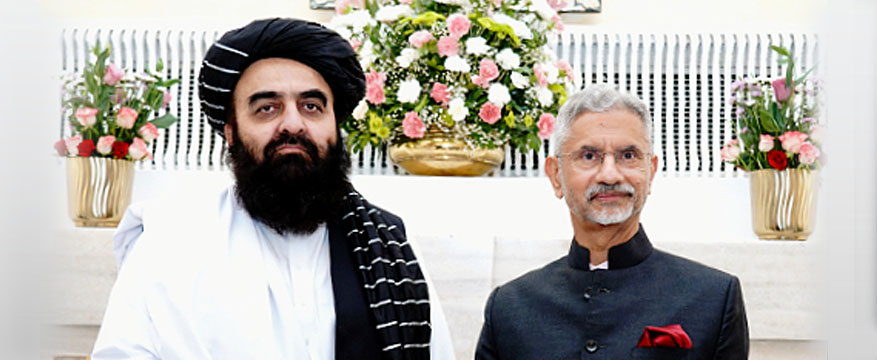
South Asia is witnessing new alignments, with divergences between old allies (the Afghan Taliban and Pakistan) and convergences between new partners (India and the Afghan Taliban).
Publisher: Shipra Publications (2009)2009 The volume highlights various contemporary issues confronting the SAARC countires in the 21st century. It seeks to provide substantive reference material for policy-makers, researchers, diplomats and...
Publisher: Pentagon Press This book deals with the history of Muslim political thought from the time of the Prophet to early 21" century in `West Asia` (an Indian alternative to...
This paper suggests an approach towards building conditions necessary for peace between India and Pakistan. Identifying the Pakistani army as a power centre in Pakistan, the hypothesis is that a...
In this monograph, the Arthasastra framework is used for examination of dynamics of fragility in South Asia, with a case study of Pakistan. The insights into human policy choices which...
Publisher: Academic Foundation The contemporary strategic context is increasingly defined by the rapid growth of major Asian economies and the rapidly increasing interest the major powers are evincing in the...
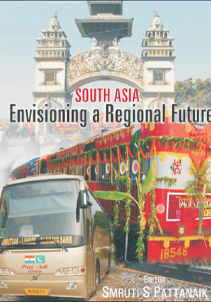
Publisher: Pentagon Security International This volume includes a collection of papers contributed by eminent scholars and analysts from the South Asian region on how they visualise South Asia a decade...
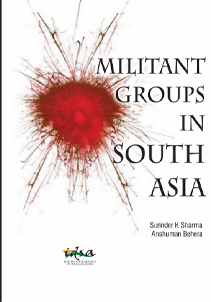
Publisher: Pentagon Press This book is an attempt to profile important militant groups presently active in South Asian countries. The threat perception from each group has been covered in this...
Publisher: Routledge This book analyses the structure of the India–China relationship and the two prominent powers’ positions with and against each other, bilaterally and globally, in a complex Asian environment...