Power without Majority: Nepal 2026
Given the leadership rivalries and organisational weaknesses, no single party is expected to secure a majority in the March 2026 elections.
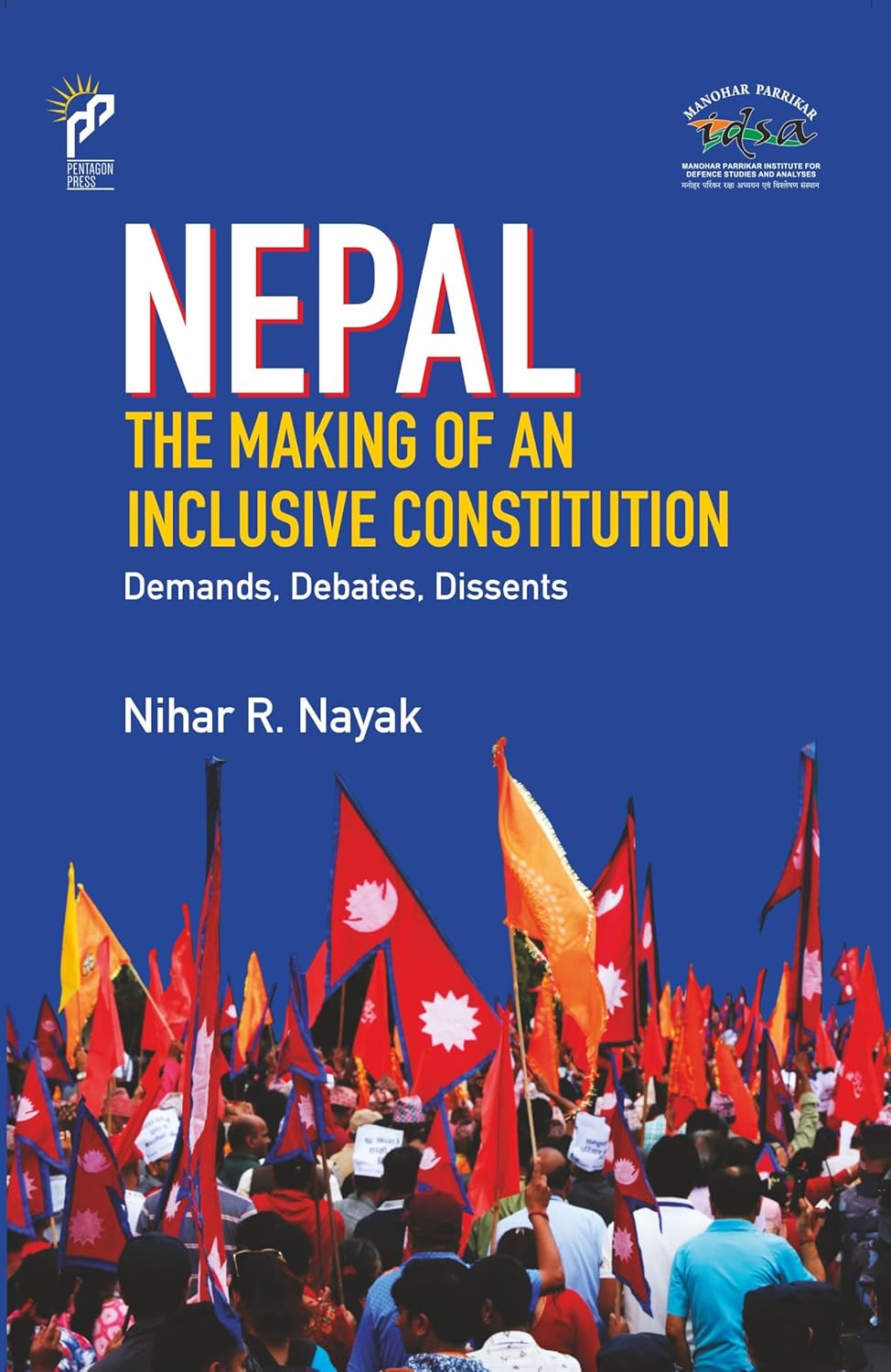
This book delves into the intricate dynamics surrounding the creation of Nepal’s constitution and the persistent struggle for inclusion by marginalised groups such as the Madhesis, Janajatis, and others. It provides a comprehensive analysis of the movements opposing the 2015 Constitution and their implications for Nepal’s internal stability and India-Nepal relations.
The text is structured into six chapters, in addition to the introduction and conclusion. The introduction provides an overview of the key themes in the book as well as the research methodology employed in the study. The book begins by examining Nepal’s ethnic-regional dynamics, highlighting the dominance of Hill elites and the marginalisation of Janajati and Madhesi communities despite constitutional promises of inclusivity. It traces the evolution of Janajati and Madhesi movements, detailing their historical roles, internal divisions, and struggles to consolidate political power. The book explores the Madhesi identity discourse, shaped by cultural discrimination, and examines how fragmentation within the Madhesi movement has weakened public support and controversies involving India’s perceived role. It also discusses the Maoist movement’s appropriation and neglect of Janajati demands, the challenges faced by Nepal’s constituent assemblies in drafting an inclusive constitution, and the growing public disillusionment with the democratic process. Finally, it analyses external influences on Nepal’s internal politics, including Western countries’ advocacy for ethnic-based federalism, India’s strained relations over Madhesi demands, and China’s reservations about federalist policies.
The study bridges a critical research gap by focusing on post-2015 developments in these movements and their evolution within the changing political landscape. The conclusion warns that without empathetic efforts to address marginalised groups’ demands, Nepal risks prolonged political instability and strained relations with India, given the latter’s deep societal and strategic ties with Nepal. This book is essential for those seeking to understand Nepal’s constitutional journey, its marginalised communities’ aspirations, and the broader regional ramifications.
The coalition between the two largest parties, Nepali Congress (NC) and Communist Party of Nepal-Unified Marxist-Leninist (CPN-UML), is more of a necessity than a choice in Nepal’s unstable politics.
The instability of coalition governments in Nepal can be attributed to several factors, including a complex electoral system, personal ambitions of political leaders, and external pressures.
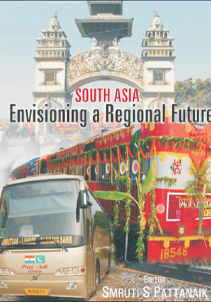
This volume includes a collection of papers contributed by eminent scholars and analysts from the South Asian region on how they visualise South Asia a decade hence. It is recognised that the region suffers from several constraints that has made common challenges difficult to address; nevertheless, there is an optimism that the region will move forward steadily albeit slowly, to evolve a common agenda, and shape a regional identity that would form the bedrock of any cooperative endeavour.
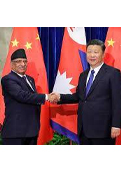
Nepali Prime Minister Pushpa Kamal Dahal’s visit to China on 22 September 2023 assumes significance, given the growing engagement of China in many sectors of Nepalese economy in the last few years.
The involvement of high-ranking politicians in the Bhutanese refugee scam shows a well-established corruption network.
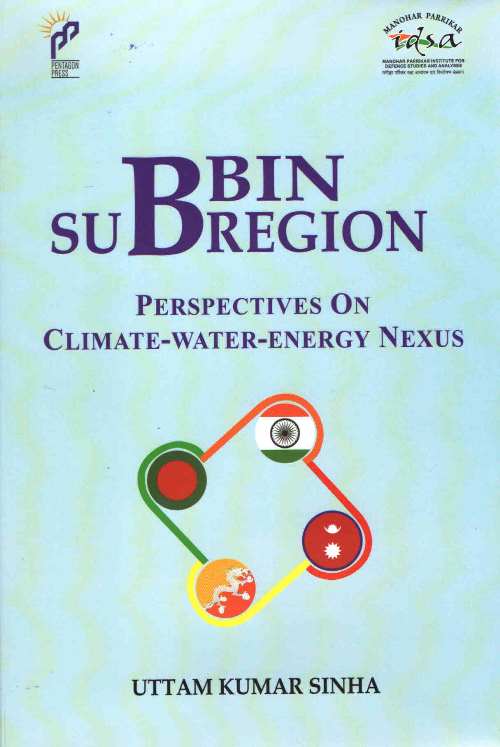
The climate-water-energy nexus is now a familiar concept in the resource management debate requiring long-sighted approaches that help avoid maladaptive pathways and, as a tool, to anticipate the tilt and balance of the nexus resources and the nature of their interactions. The nexus as a policy approach brings together the concept of ‘security and sustainability’. However, the framing of the nexus around a scarcity crisis narrative often pushes states towards control and possessiveness of the resources rather than driving them towards stability and durability solutions. Beyond this framework, a more nuanced political–economy understanding of the BBIN sub-region is essential.
The two Himalayan states—Nepal and Bhutan—adopted a new political system in 2008. Nepal upgraded the existing multiparty system by excluding the monarchy. Therefore, Nepal had Constituent Assembly elections in May 2008.
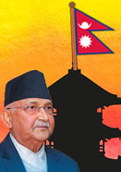
The public faith in the constitution and political system in Nepal has eroded drastically in last one year. However, for now, all eyes are set on whether the Supreme Court would validate the President’s May 22 action.