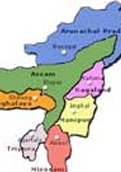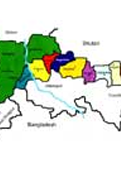
Northeast India

Transformation of Indo-Bangladesh Relations: From Insecurity to Cooperation in Northeast India

Bangladesh and India are enjoying increasingly close relations in the latter’s northeastern region. This represents a transformation in the two countries’ past relationship, which was characterised by suspicion, distrust and insecurity. This recent change, which began with the arrival of Bangladesh’s current regime in 2009, has resulted in a sense of cooperation, mutual interest and connectivity. This article aims to explain this transformation.

Look/Act East Policy, Roads and Market Infrastructure in North-East India

The socio-politico-economic scene in India’s North-east region has guided certain aspects of the country’s domestic and international policy. The Act East Policy (AEP) of the government of India aims to build relations with the countries of South-East Asia, including trade relations, for which the north-east serves as the gateway. This article seeks to analyse the relevance of the policy: How is it grounded in the complex region of north-east India? In what way can it impact the region?

Unheeded hinterland: identity and sovereignty in northeast India, by Dillip Gogoi

Partly the result of a political and physical isolation compounded by decades of conflict in the region, Northeast India is often viewed through the prism of security studies, institutional performance or developmental governance. While important contributions in themselves, a state-centric focus often overlooks the complexity of the causes and dynamics. It ignores the consequences of regional societal forces’ articulation of identity, nationalism, separatism and sovereignty that can shape political boundaries in the region, thus overlooking the salience of subaltern narratives.