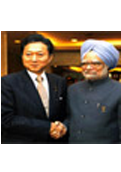
The Joint Statement catapulted India-Japan strategic and global partnership to a “New Stage” in which the bilateral relationship is going to be deepened on all fronts, embracing regional, global and economic issues.
Bangladeshi Prime Minister Sheikh Hasina is visiting India on January 10, 2009. Both India and Bangladesh are looking foward to resolving some of the key bilateral issues. In the light of the new political climate in Bangladesh ever since Sheikh Hasina returned to power, what are the options for India?
Clearly, there is immense scope for cooperation between India and Myanmar to deal in agro-based products, floriculture, engineering, timber and tobacco and expand business cooperation. Although there has been a significant increase in bilateral trade in recent years, full potential has yet to be realised.
The point of significance is that even as the Army prepares for the worst case, it would be a political-diplomatic-strategic exercise to ensure that such a scenario does not arise.
India is being subjected to increasing pressure from the developed countries to cut down on its carbon emissions on the grounds that it is the fifth largest consumer of energy. This comes even as there are forecasts that India's energy consumption will increase incrementally as it tries to address the challenges of its social and development goals by increasing and sustaining economic growth at around 8–10 per cent of its GDP.
The IAF should consider utilising the available aircraft and infrastructure at flying clubs for imparting basic training to its pilot trainees before sending them to the Kiran HJT-16.
Suicides/fratricides in operational areas mainly take place due to domestic problems of the affected individual rather than because of any undue stress resulting from job-related stress in the operational environment.
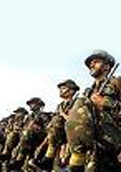
The Indian Army is likely to come under assault from changes occurring within society which are predicted to speed up considerably over the coming decade.
Instead of beefing up army/police/paramilitary forces in the towns and cities, the government needs to urgently take measures to prevent entry of the criminal and terrorist elements at or close to the border.