India’s approach to Asia Pacific
This policy brief discusses some of the key trends in the Asia Pacific and sets out a long-term approach for India so as to maximise its security and developmental opportunities.
- Arvind Gupta
- September 19, 2013
This policy brief discusses some of the key trends in the Asia Pacific and sets out a long-term approach for India so as to maximise its security and developmental opportunities.
Though public-private partnerships is encouraged, privately the government continues to retain its monopoly on research and development and defence production through the DRDO, the ordnance factories and the defence PSUs.
Creation of new states is likely to undermine India’s polity and governance and consequently the socio-economic progress. Cost-benefit analysis suggests that only in some respects the newly-created states have performed better.
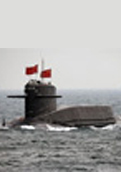
The Indian navy has long aspired for a true blue water capability and the aircraft carrier project is a critical part of safeguarding India’s maritime interest that includes providing security along the sea lanes of communication.
Over the past few years, ‘trilateral economic cooperation’ and ‘vibrant bridge’ have become buzzwords in Nepal’s foreign policy discourse, and have also caught the popular imagination at home in India. These proposals have generated both curiosity and anxiety in Delhi’s diplomatic and academic circles that are otherwise largely indifferent to Nepal. The Chinese diplomats in Delhi also raising the issue with the Indian officials has added to India’s anxiety all the more. With some notable exceptions (e.g., C.
Integrating the restive Tibetan minority with China has been the primary domestic challenge for Beijing. Thus far, its Nepal policy has been crafted essentially to address the Tibetan question. The idea of trilateral cooperation between India, Nepal and China apparently floated by Pushpa Kamal Dahal (Prachanda) in April 2013 was, in effect, first made by the former Chinese ambassador to Nepal, Yang Houlan, in 2012.
Trilateral cooperation between India, Nepal and China needs to be seen from the perspective of how beneficial it is for all three countries. However, such cooperation cannot be divorced from India’s security concerns and its close relations with Nepal. Moreover, there are several issues that come into question, too. Are there any objectives behind this proposal? Does it involve only developmental cooperation? Does it undermine India’s security interests?
Prachanda’s proposal for trilateral cooperation between India, Nepal and China seems reasonable on the face of it. However, both China and Nepal should be aware that it will create a lot of misunderstandings in India. The reasons for this are as follows:
Pushpa Kamal Dahal, alias Prachanda, made the trilateral proposal during his official visit to India in April 2013. This was the third time since 2010 that Prachanda had raised this issue. This concept seems to be a modified version of his earlier ‘equidistance policy’, which was declared after he became prime minister in September 2008. He proposed trilateral cooperation for the first time in October 2010 after visiting Beijing.
Pushpa Kamal Dahal, alias Prachanda, the chairman of the United Communist Party of Nepal (UCPN) (Maoist), visited India on April 27–30, 2013, shortly after he had returned from a week-long visit to China. During his visits to China and India, Prachanda proposed trilateral cooperation between India, Nepal and China. Although he assured India that this trilateral cooperation would be founded on the bilateral relations that Nepal already shares with India, he clearly did not elaborate on the nature of this trilateral cooperation and the issues that need to be discussed within this framework.