The Pahalgam terrorist attack of April 2025 and the Indian Army’s subsequent action were a matter of great public and strategic debate. The focus was on how the operation was...
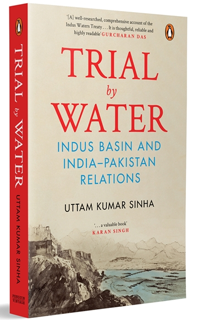
Publisher: Penguin Random House India In 1947, the Indian subcontinent was partitioned, and Pakistan was born. A shared heritage, a composite culture and centuries-old bonds between people, all seemed to...
Chinese responses to the India–Pakistan conflict is a reminder of the perennial strategic challenge that the China–Pakistan nexus poses to India’s security.
This paper suggests an approach towards building conditions necessary for peace between India and Pakistan. Identifying the Pakistani army as a power centre in Pakistan, the hypothesis is that a...
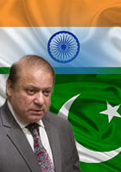
Nawaz Sharif's statements on forging 'good ties' with India after his return to Pakistan are unlikely to translate to any meaningful forward movement in bilateral ties.
Publisher: Institute for Defence Studies and Analyses Pakistan has invariably evoked a great deal of interest among India’s strategic affairs community. Because of historical, geographical, economic and cultural linkages, developments...
Publisher: Institute for Defence Studies and Analyses India is facing a serious water resource problem and as trends suggest, it is expected to become 'water stressed' by 2025 and 'water...
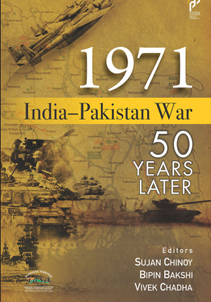
Publisher: Pentagon Press India’s decisive and historic victory in the 1971 India–Pakistan War is considered to be one of the landmark geopolitical events in the history of the sub-continent. One...
As the civilian political space shrinks and the capacity of the state gets hobbled by political dissension and internal resistance from forces armed with an alternate blueprint for action, Pakistan...