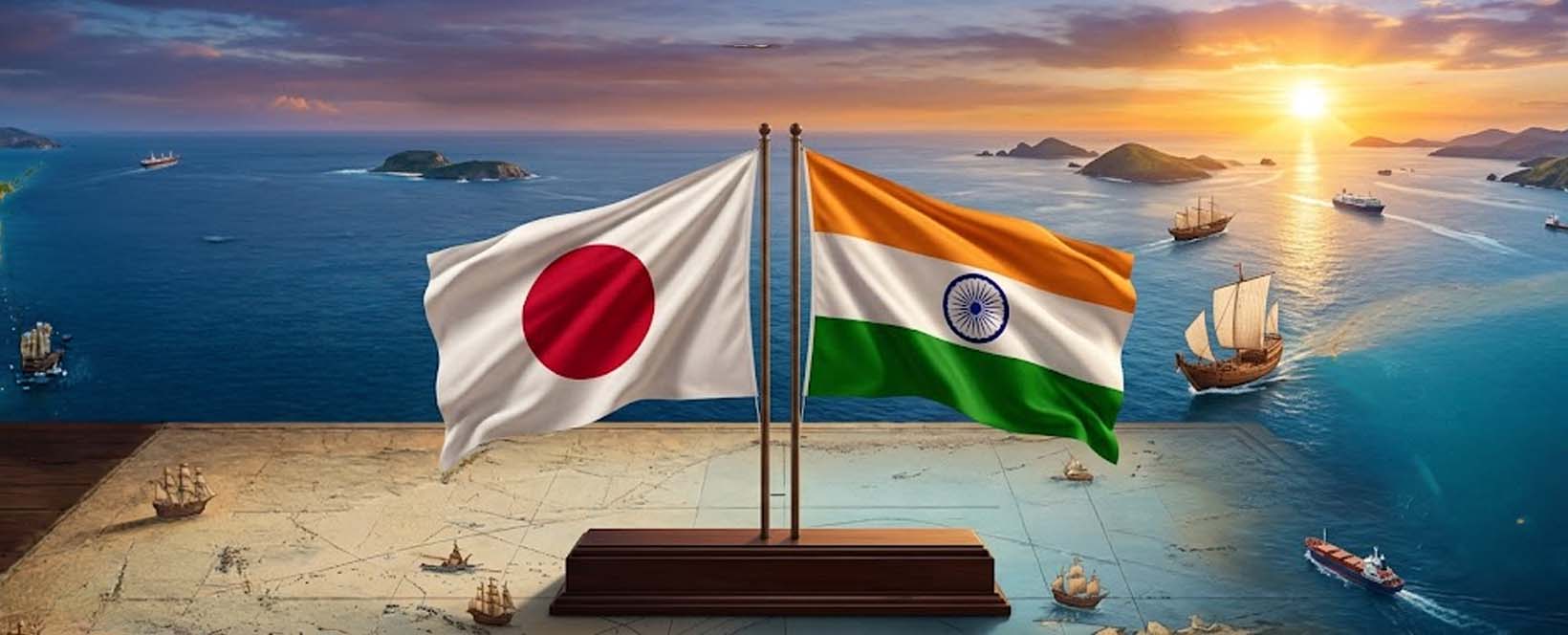
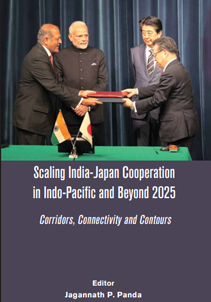
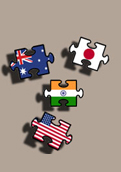
This book aims to examine the scope and potential of India-Japan cooperation factoring infrastructure connectivity and corridors in Indo-Pacific. The volume examines the bilateral, trilateral and multilateral contours of the growing partnership in the backdrop of a rising China that is rapidly changing the geo-political order of the region. The volume examines the scope of India-Japan relations beyond 2025 and evaluates how their common pledge to have a “partnership for prosperity” is not free from challenges. China’s Belt and Road Initiative, the United States bilateral-oriented approach towards Asia, and the struggle to successfully conclude the Regional Comprehensive Economic Partnership (RCEP) is testing the character of India-Japan relations which the volume covers at length.
Security relations between India and Japan hold great potential to shape the future security architecture of the Indo-Pacific region. This book delves into this aspect holistically tracing the linkages between the two countries with advent of Buddhism into Japan from India, through China and Korea. Geography and strategic factors shaping the security of Japan have been evaluated and issues of defence cooperation, maritime security, cooperation in UN Peace Keeping Operations and strategic partnership between Indian and Japan have been deliberated. Set in both, a bilateral as well as a regional context, the security dynamics between the two countries has been analysed to arrive at pragmatic recommendations that must be implemented for an enhanced relationship in the security realm. Quantitatively assessing the India Japan security cooperation, the book carries out a Strength, Weakness, Opportunity and Threat (SWOT) analysis to arrive at the strategies for enhancement of such cooperation.
Prime Minister Narendra Modi’s visit to Japan, Papua New Guinea and Australia provides glimpses of how India can best exemplify the voice of the Global South.
Japan is likely to play a decisive role in positioning Northeast India as a powerhouse through improved connectivity, opening up trade corridors and driving better economic integration.
Considering that the US, Japan, Australia and India are committed to working for a free, open and rules-based Indo-Pacific, it is time for India’s strategic partners to review their cartographic positions on India’s borders.
While broad agreement at the top leadership level has been easy to achieve, negotiations relating to defence equipment and technology cooperation have proved to be difficult, shaped as these are by a complex interplay of variables like cost-competitiveness, technology transfer and domestic politics.
The India-Japan ‘action-oriented partnership’ is founded on the pillars of mutuality of interests, shared universal values and commonality of vision in the Indo-Pacific.