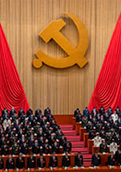
The growing insecurity and threat perceptions articulated in the 20th Party Congress Work Report by Chinese President Xi Jinping indicates that Beijing is likely to become more assertive and belligerent in its international dealings.
The PLA Western Theatre Command has focused on joint operations capabilities to counter the perceived lack of air superiority and information dominance in the theatre, which it believes is required for strike operations.
The launch of the Lancang-Mekong Cooperation (LMC) opened a fresh chapter in international politics in the Mekong region, by marking China’s official entry into the continental Southeast Asian arena. However, little is known about the LMC’s evolution. By extensively relying on the recently opened Archives in Bangkok, this article illuminates facts and narrates the LMC’s formation, with special emphasis on the Chinese perspective.
The impending removal of the piracy High Risk Area off the coast of Somalia presents an ideal opportunity for India, in partnership with the wider Indo-Pacific maritime community, to delegitimise China’s naval presence and strengthen regional mechanisms for ensuring maritime security.