While there has been a significant reduction in opium cultivation in Afghanistan under the Taliban’s watch, there is a need to more effectively address underlying drivers of opium cultivation.
The principle of the Association of Southeast Asian Nations (ASEAN) centrality is embedded within the intricate dynamics of the broader Indo-Pacific region. This phenomenon can be attributed to the susceptibility of ASEAN’s centrality to various hegemonic processes. The article unveils challenges to ASEAN centrality arising from competing interests and alignment conflicts, particularly in relation to China and the United States (US). The emergence of strategic frameworks, coupled with China’s
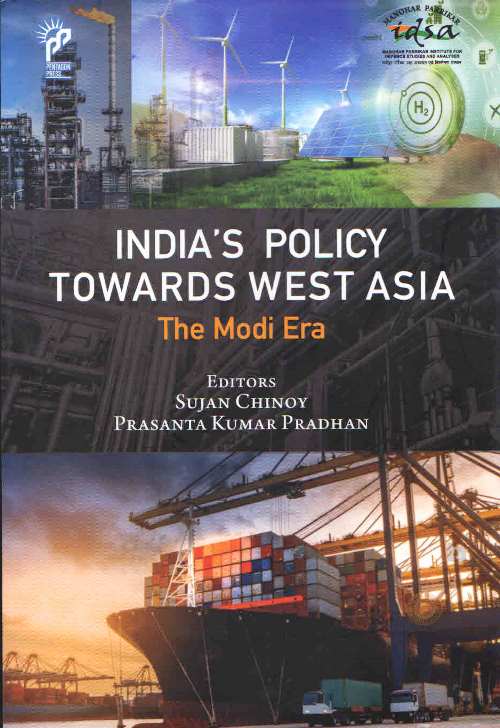
West Asia holds significant relevance for India due to a multitude of economic, political, strategic and security factors. India considers the West Asian region as its ‘extended neighbourhood.’ Since Prime Minister Narendra Modi assumed office in 2014, India’s West Asia policy has received renewed attention, marking a notable transformation in its foreign policy approach towards the countries of the region. In recent years, engagement between India and the West Asian region has moved beyond the traditionally dominant spheres of trade, energy and diaspora ties. India has emphasised cooperation in the fields of defence and security, building strategic partnerships and is exploring new areas of cooperation in sectors such as renewable energy, health, climate change, food security, connectivity and so on. Prime Minister Modi’s ‘Think West’ policy has further prioritised engagement with the West Asian countries.
This book provides scholarly perspectives on Modi’s policy and approach towards the West Asian region. The authors reflect on different dimensions of the India–West Asia relationship, examine the key changes in India’s approach under the Modi government and explore the opportunities and prospects of cooperation in the new and emerging fields. The authors aver that Prime Minister Modi’s continuous engagement with the regional leaders at bilateral and multilateral levels, the convergence of interests between India and the West Asian countries, India’s increasing stakes in the region and a changing perception of India in the minds of regional leaders are some of the key drivers of the fast-growing India–West Asia relationship.
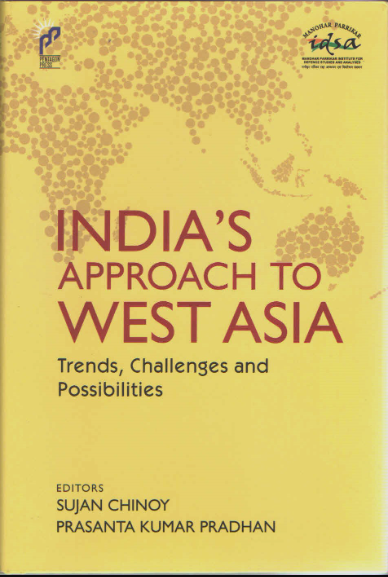
This volume provides perspectives of scholars from India and West Asia on several bilateral issues of concern, challenges and scope for further cooperation. The authors contend that a convergence of interests between India and West Asian countries across numerous domains, coupled with India`s escalating stakes in the region, and the growing recognition among West Asian nations of India`s burgeoning economic and political influence, stand as key drivers underpinning the India-West Asia relationship. Furthermore, they have underscored that under the leadership of Prime Minister Narendra Modi, India’s West Asia policy has undergone a major transformation.
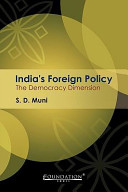
SD Muni, India’s Foreign Policy: the Democracy Dimension (With Special Reference to Neighbours), Foundation Books, Delhi, 2009, pp. 174. ISBN 978 81 7596 713-7. Price not stated.