The Arms Trade Treaty is flawed and requires strengthening. Ratified States need to take the lead in fortifying the Treaty before more member States are asked to join.
During his first term, Modi had invested considerable political capital in cultivating critical players. The second term should enable him to reap the fruits of his political investments and elevate his engagements to a higher level.
There is a need to make it clear in the text of Paragraph 72 of DPP 2016 that no vendor other than the Development-cum-Production partner or the nominated Production Agency will be permitted to enter the tendering process at the post prototype development stage.
In this era of complex interdependence, sudden disruptions in supply chains will not only hurt Chinese businesses in the US and elsewhere, but also damage the US economy as well as its reputation as a business destination.
If Baghdadi has possibly moved toward the east, then the proclamation of an Indian branch flashes a note of caution for the security and intelligence agencies.
By implementing the Protection from Online Falsehood and Manipulation Act (POFMA) 2019, Singapore is demonstrating resolve to fight the growing spread of false news and misinformation campaigns.
With China now willing to discuss issues of mutual interest with India, a well-structured bilateral dialogue on regional and global terrorism may go a long way in convincing Beijing of the need to put pressure on Islamabad to act against terror
A cyber exercise – whether CyberEx or its successor – needs to be developed as a platform for practitioners and thinkers to test conceptual and technical skills under near-real-world whole-of-nation scenarios of cyber contingencies.
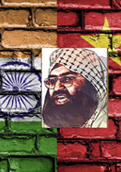
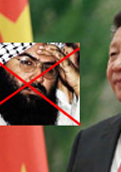
The decade-long effort to list Azhar showcases the pragmatism that marks India's multilateral diplomacy and questions the general perception that India's multilateral approach is ambivalent and inconsistent.
While the purpose of the Fall Clause, a price safety mechanism in rate contracts, is indubitable, some issues concerning its applicability and implications, both for the buyer and the seller, merit a review.
Are the Maoists focusing more on IED-based blasts and in the process minimizing their own casualties instead of attempting to win a war of attrition by inflicting tactical and psychological blows to the security forces?
The Sri Lanka Easter bombings has allowed ISIS chief Abu Bakr Al Baghdadi to launch a public relations offensive and enunciate a dangerous new strategy.
It is neither the Wuhan spirit nor India’s zero tolerance on terrorism but China’s own vulnerability to terror that caused Beijing to ultimately take on board New Delhi’s concerns on terrorism.
What pales the counter-terrorism regime is not that its procedures are cumbersome or that its working is not transparent, but that it only selectively raises the cost for those who inflict terror.
The Easter bomb blasts is a grim reminder of how the undercurrent of ethno-religious violence remains a dominant factor in Sri Lanka’s chequered history.
China's Belt and Road Initiative helps African countries in reducing the infrastructure gap in the region. However, it also leaves them open to the risk of unsustainable debt.
India needs a comprehensive space security architecture consisting of a dedicated Space Command for operational aspects as well as an exclusive Defence Space Research Agency to focus on scientific and technical aspects.
Given India’s dependence on imports for 90 per cent of its telecom equipment, the decision to allow Huawei to bid for 5G should be in line with the national interest, rather than taking sides and constraining options.
There is an urgent need to formulate a ‘Counter Proxy War Doctrine’ that integrates diplomacy, defence, development and other tools of hard and soft power.