Uttam Kumar Sinha

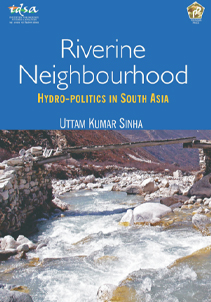
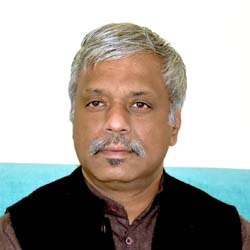
Uttam Kumar Sinha is a leading scholar and commentator on transboundary rivers, climate change and the Arctic. He was Co-Chair of the Think-20 Task Force on ‘Accelerating SDGs: Exploring New Pathways to the 2030 Agenda’ during India’s G20 Presidency. After a brief stint in the print media and a doctoral degree from Jawaharlal Nehru University, he joined the MP-IDSA in 2001, where he coordinates the Non-Traditional Security Centre and is the Managing Editor of Strategic Analysis published by Routledge, the institute’s flagship journal. He is a recipient of many fellowships and leadership programmes including senior fellow at the Prime Ministers Museum and Library (2018-2020); Academic Visitor at the Harvard Kennedy School (2015); Chevening ‘Gurukul’ leadership at the London School of Economics and Political Science (2008) and a visiting fellow at the Peace Research Institute Oslo (2006). His recently published work is Trial By Water: Indus Basin and India-Pakistan Relations (Penguin 2025); BBIN Sub-Region: Perspectives on Climate-water-Energy Nexus (Pentagon Press, 2023), Indus Basin Interrupted: A History of Territory and Politics from Alexander to Nehru (Penguin, 2021). His other works include the Riverine Neighbourhood: Hydro-politics in South Asia (Pentagon Press, 2016) and Climate Change Narratives: Reading the Arctic (2014). His edited and co-edited volumes include Modi: Energising a Green Future (Pentagon, 2023); Modi: Shaping a Global Order in Flux (Wisdom Tree, 2023); MODI 2.0: A Resolve To Secure India (Pentagon Press, 2021); The Modi Doctrine: New Paradigms in India’s Foreign Policy (Wisdom Tree, 2016); Non-Traditional Security Challenges in Asia: Approaches and Responses (Routledge, 2015); Arctic: Commerce, Governance and Policy (Routledge, 2015) and Emerging Strategic Trends in Asia (Pentagon Press, 2015).
Senior Fellow

Publication

Towards Riparian Rationality: An Indian Perspective

Research Fellow, IDSA, Dr Uttam Sinha's chapter titled, ‘Towards Riparian Rationality: An Indian Perspective’ was published in the volume China-India Relations: Cooperation and Conflict, (eds) Kanti Bajpai, Huang Jing and Kishore Mahbubani (Routledge, 2015).

About the Book

The question of whether China and India can cooperate is at the core of global geopolitics. As the two countries grow their economies, the potential for conflict is no longer simply a geopolitical one based on relative power, influence and traditional quarrels over land boundaries.

This book assesses the varying interests of China and India in economics, environment, energy, and water and addresses the possibility of cooperation in these domains. Containing analyses by leading authorities on China and India, it analyses the nature of existing and emerging conflict, describes the extent of cooperation, and suggests possibilities for collaboration in the future. While it is often suggested that conflict between the giants of Asia is the norm, there are a number of opportunities for cooperation in trade, international and regional financial institutions, renewable energy development and climate change, and shared rivers.

This book will be of interest to researchers in the fields of Asian Studies, International Relations, and Asian Politics.

Read the book [+]

Arctic: Commerce, Governance and Policy

Publisher: Routledge
ISBN: 978-1-13-885599-1
Price: $145.00
In May 2013, China, India, Japan, Singapore and South Korea (Asia 5) were given status as permanent observers in the Arctic Council. It was a symbolic and significant moment in the history of Arctic affairs. The list of stakeholders in the Arctic has now expanded to include both the Arctic littoral states and the five Asian states. The drivers and policies of these stakeholders on the Arctic vary, but research on climate change, possible changes to the global energy and minerals markets, adherence to international norms like the UNCLOS, and geopolitical considerations are issues of concern.

Non-Traditional Security Challenges in Asia: Approaches and Responses

  • Publisher: Pentagon Press

Asia is challenged by a number of non-traditional security issues including the food–energy–water nexus, climate change, transnational crime, terrorism, disaster relief and economic performance. This volume categorizes and clarifies some key emerging issues in the area and looks at their interconnectedness and implications.

  • ISBN 978-11-3889-253-8,
  • Price: $110.00/-

Challenges to the Himalayan Watershed

Research Fellow, IDSA, Dr Uttam Sinha's chapter ‘Challenges to the Himalayan Watershed’ was published in the volume ‘Himalayan Bridge’edited by Niraj Kumar, George Van Driem and P Stobdan.

Abstract of the Chapter

This chapter observes the driving forces behind the water demand, on the political obstacles that stand in the way of river cooperation and the behaviour of riparians in the backdrop of the changing Himalayan hydrology.

More details [+]

Emerging Strategic Trends In Asia

  • Publisher: Pentagon Press

There is little doubt that Asia – stretching from the Eurasian landmass to the maritime reaches of Australia and the South Pacific – is experiencing a major shift in the global balance of power. Expressions like the ‘Indo-Pacific’ and ‘Asia-Pacific’, contested they maybe, capture Asia’s expanse and dynamism. A power shift from the West to the East is well under way.

  • ISBN 978-81-8274-823-1,
  • Price: ₹ 1095/-
  • E-copy available

The Arctic and India: Strategic Awareness and Scientific Engagement

A global temperature rise is being experienced earliest and most intensely in the Arctic region. The changes are worrying but the commercial interests are equally enticing. The Arctic is witnessing the convergence of the geophysical, the geo-economic and the geostrategic in strange and dramatic ways, making it a paradox and an antithesis. For India, the Arctic is distant when it comes to economic interests and near when it comes to climate change.

Water Issues in the Near East and South Asia Region: Risks and Solutions

With water concerns growing increasingly urgent, the global community will benefit from a treatment of the lessons learned and best practices in water dispute resolutions and approaches to water management. This report discusses the outcome of a working group of water experts from the Near East and South Asia (NESA) region,1 set up by the Strategic Studies Network, National Defense University, Washington DC.

Climate Change Narratives: Reading the Arctic

In an interconnected world with interlinked issues, understanding Climate Change and the Arctic and exploring the intersection between the two is extremely important. The monograph addresses Climate Change as a security risk; as a geopolitical orientation and as an energy challenge, and maps the impact of these narratives on the Arctic.

The Arctic: An Antithesis

The Arctic ice is melting faster than predicted. In August 2012, calculations based on the satellite imagery indicated that the summer sea ice loss was 50 per cent higher than earlier estimates. 1 Scientific evidence now suggests that the Arctic, by the middle of the century, will be ice free in the summer. Scientists call it the ‘Arctic amplification’—the reduction in the ice cover not only reduces the reflection of the sunlight but also increases the absorption of heat as the darker water is exposed.