Rajeesh Kumar

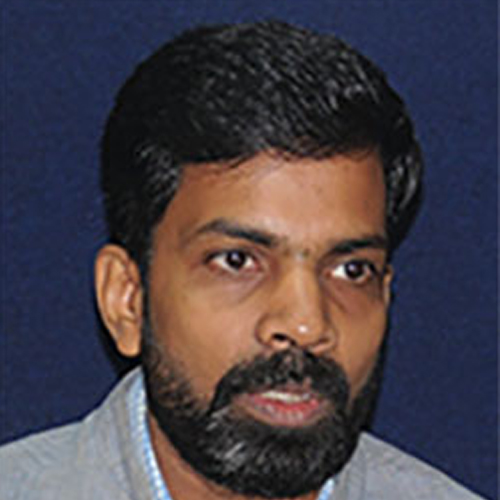
Dr Rajeesh Kumar is a Research Fellow at the Institute. Dr Kumar completed his PhD from the Centre for International Politics, Organization and Disarmament, Jawaharlal Nehru University, New Delhi. Prior to joining MP-IDSA in 2016, he held teaching positions at Jamia Millia Islamia, New Delhi and University of Calicut, Kerala. He is also the Book Review Editor of Strategic Analysis published by Routledge, the institute’s flagship journal.

Dr Kumar is the author of the monographs titled – Indian and Chinese Approaches to United Nations Peacekeeping in Africa (MP-IDSA, 2024), Principled but Evolving: India’s Approach to Multilateral Peace and Security (MP-IDSA, 2021) and The International Committee of the Red Cross in Internal Armed Conflicts: Is Neutrality Possible (Palgrave Macmillan, 2019). He is also the co-editor of India and Africa: Deepening the Security Engagement (Pentagon, 2024), Eurozone Crisis and the Future of Europe: Political Economy of Further Integration and Governance (Palgrave Macmillan, 2014) and Islam Islamist Movements and Democracy in the Middle East (Global Vision, 2013). His articles, opinion pieces, and reviews have appeared in Journals and Newspapers, including Strategic Analysis, India Quarterly, Journal of Defence Studies, Journal of Common Market Studies, Central European University Political Science Journal, The Indian Journal of Politics and International Relations, E-International Relations, The Hindu, The Diplomat, Japan Times, Tehran Times and The Outlook.

He was also one of the Co-Chairs of the Think-20 Task Force on ‘Reformed Multilateralism: Transforming Global Institutions and Frameworks’ during India’s G20 presidency.


Research Fellow

Publication

International Law Matters: Implications of the ICJ Reparations Judgment in the DRC v. Uganda Case

The ruling is considered the most detailed decision of the United Nations' top court in war compensation and signifies the occupying powers' reparation duties for damages resulting from its direct and indirect actions that violate international law. The judgement is undoubtedly historic and destined to act as a precedent for future cases. It once again establishes the fact that international law matters in situations of interstate armed conflicts.

WTO TRIPS Waiver and COVID-19 Vaccine Equity

The vaccine inequity is not only morally indefensible but clinically counter-productive. Allowing most of the world’s population to go unvaccinated will only spawn new virus mutations. Preventing this humanitarian catastrophe requires removing barriers – such as TRIPS – to vaccine production and its equitable distribution.

India in the United Nations: Interplay of Interests and Principles

The year 2020 marked 75 years of India’s association with the United Nations. India was one of the founding members of the UN when its institutional edifice was built in 1945. Since then, the concept of UN centrality in international peace and security matters is one of the features of Indian foreign policy. Over the decades, India played an active role in the UN’s political process and significantly contributed to its policies and programmes. At the UN, India stood at the fore of the struggle against colonialism and apartheid.

Exit of the African Union-United Nations Hybrid Operation in Darfur (UNAMID)

UNAMID's exit did not emerge from a context of peace or progress towards conflict resolution in Darfur. Instead, the exit decision was essentially the outcome of the reflection that keeping the mission on the ground would not change the situation. Initially, the hybrid peacekeeping model was seen as a paradigm shift in peacekeeping operations, and many hailed it as the future of UN peace operations.