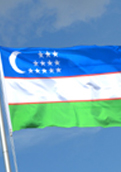
The Uzbek approach to dealing with radicalisation and extremism has evolved from tough and uncompromising measures to a flexible and accommodative approach.
India needs to rope in one or more of the Central Asian countries, preferably Uzbekistan and Kazakhstan, in the Chabahar project, to fully exploit its potential.
While it was difficult to delve into the depth of the country’s internal dynamics, the overall impression one got was that the democratic process is making marked progress, albeit as...
Everything is geopolitical in Central Asia where the newly independent state (NIS) Kazakhstan, Kyrgyzstan, Tajikistan, Turkmenistan and Uzbekistan are located. In other words, the major international political events in the...
Indian Prime Minister Manmohan Singh concluded his two-day state visit to Uzbekistan on April 26, 2006. This was the second visit by an Indian Prime Minister to Tashkent since Uzbekistan's...
Prime Minister Manmohan Singh is visiting Tashkent April 25-26, 2006 on a two-day state visit to Uzbekistan at the invitation of the Uzbek President, Islam Abduganievich Karimov who himself had...