This article aims to delve into the patterns of convergence and divergence of interests among three key regional players in the Middle East: the Russian Federation, Turkey and Iran.
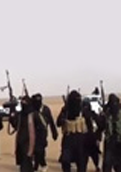
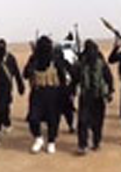
In the West, there is growing realisation that only boots on the ground can defeat or substantially destroy the Daesh. Unless a ground force capable of taking back the territories...
Turkey’s natural gas reserves are 218 bcf and its production is roughly 27 bcf. It relies heavily on imports to meet its domestic demand. Additionally, Turkey positions itself as a...
In more than three decades, ever since the Islamic-oriented National Order Party was formed in 1969, Turkish politics has been analysed by many in terms of two straitjacketed views: Islamists...
The US may have provided the support and platform for the apology, but it was something Israel had to do desperately as it was finding the developing regional situation difficult...
The Patriot deployments signify Turkey’s attempt to secure itself and its allies against touted missile threats from the two countries with which it shares borders to the east – Syria...
Turkey is realising that a soft power-based foreign policy was successful and gave returns with minimum risks only when the region was stable. With the Middle East going through a...
Iran, Israel and Turkey have adopted a two pronged approach to deal with the Arab Spring: avoid the negative consequences of the uprisings while at the same time deriving mileage...
The Arab countries where people have successfully overthrown the dictatorial regimes now face the daunting task of moving forward with democratic processes, economic development and institution building.