Technology

India’s Tryst with 5G

A slight push in the right direction would be much more productive and efficient, such as treating telecommunications as a utility rather than a market, and building innovation and IPR ecosystems rather than incentivizing licensed production.

Munish Sharma | March 20, 2019 | Issue Brief

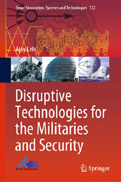
Disruptive Technologies for the Militaries and Security

  • Publisher: Springer, Singapore
This book debates and discusses the present and future of Disruptive Technologies in general and military Disruptive Technologies in particular. Its primary goal is to discuss various critical and advanced elucidations on strategic technologies. The focus is less on extrapolating the future of technology in a strict sense, and more on understanding the Disruptive Technology paradigm. It is widely accepted that technology alone cannot win any military campaign or war. However, technological superiority always offers militaries an advantage. More importantly, technology also has a great deterrent value. Hence, on occasion, technology can help to avoid wars. Accordingly, it is important to effectively manage new technologies by identifying their strategic utility and role in existing military architectures and the possible contributions they could make towards improving overall military capabilities. This can also entail doctrinal changes, so as to translate these new technologies into concrete advantages.
  • ISBN: E-book-978-981-13-3384-2, Hardcopy-978-981-13-3383-5
  • Price: E-book- € 118.99, Hardcover- € 139,99

3D Printing and Defence: A Silent Revolution

In a 3D printing technology, an object is created layer by layer through a specially designed printer using plastic or other materials. The most striking thing about 3D printing is the way it can convert the digital inventory into physical objects thereby reducing the requirement of critical storage space drastically.

Sanjiv Tomar | January 03, 2014 | IDSA Comments